Table of Contents
ToggleCall of Duty Black Ops maps are the backbone of multiplayer combat, zombie survival, and competitive play. Whether you’re dropping into the frenetic action of Nuketown or creeping through the corridors of Vault, understanding map layouts, spawns, and strategic positioning can be the difference between a killstreak and a quick respawn. The Black Ops franchise has evolved significantly since its inception, bringing dozens of iconic arenas across multiple games and platforms. Players who invest time learning these maps gain a crucial edge, map knowledge translates directly into better positioning, anticipation of enemy rotations, and control of high-value areas. This guide breaks down the most important Black Ops maps from across the series, covering classic favorites, Cold War innovations, and the latest Black Ops 6 offerings, along with strategic insights for both casual and competitive play.
Key Takeaways
- Call of Duty Black Ops maps reward map knowledge through superior positioning, spawn prediction, and rotational efficiency that directly translate to competitive success.
- Classic maps like Nuketown, Firing Range, and Launch remain staples across the franchise because they balance multiple weapon types and playstyles without forcing a single dominant strategy.
- Modern Black Ops maps like Terminus Island introduce dynamic elements such as destructible environments that shift lane access mid-match, requiring constant awareness beyond memorized callouts.
- Competitive players must understand spawn logic, identify power positions, and adapt rotation strategies in real-time—skills that separate championship rosters from one-dimensional competitors.
- Black Ops zombies and multiplayer maps demand fundamentally different skillsets: multiplayer rewards rapid decision-making and threat recognition, while zombies emphasize patience, resource management, and systematic progression.
A Brief History Of Black Ops Map Design
Map design in the Black Ops series has always prioritized a balance between vertical play, mid-map encounters, and multiple rotational paths. Early Black Ops titles (2010 onward) focused on creating compact arenas with clear lane structure, think defined sniper positions, SMG-friendly close quarters, and designated power positions. As the series matured, particularly with Black Ops Cold War and Black Ops 6, design philosophy shifted to accommodate weapon diversity: longer sightlines for ARs and sniper rifles, tighter corridors for SMGs, and dynamic map features that keep rotations unpredictable.
Treyarch, the studio behind Black Ops map design, has consistently emphasized player agency. Maps are rarely designed with only one dominant strategy: instead, they reward adaptability. A player might control the perimeter on one round and dominate a choke point the next, depending on spawns, team composition, and loadout choices. This philosophy keeps the meta fluid and prevents any single map from becoming stale across multiple seasons.
Environmental storytelling has become increasingly important too. Black Ops Cold War maps like Miami Strike and Satellite pull visual and thematic elements from Cold War spy fiction, grounding the action in setting-specific details. Black Ops 6 has continued this trend, with maps like Terminus Island featuring distinct architectural styles and environmental hazards that influence gameplay flow. Understanding a map’s design intent, not just memorizing callouts, helps players predict enemy behavior and position themselves advantageously.
Classic Black Ops Maps That Defined The Series
The original Black Ops and Black Ops 2 titles established the template for multiplayer excellence that resonates with players today. These classic arenas remain benchmarks for tight map design, balanced spawns, and memorable gameplay moments. Many of these maps have received reimagined versions in newer titles, testament to their foundational quality.
Nuketown: The Iconic Multiplayer Playground
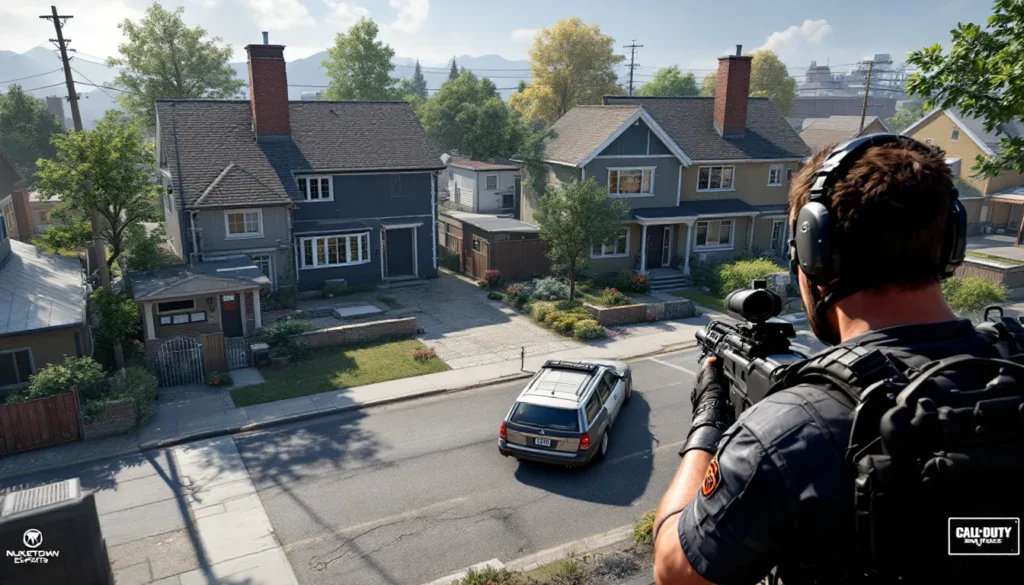
Nuketown represents the quintessential Black Ops experience, chaotic, close-quarters, and endlessly entertaining. This 1950s-themed suburban setting was introduced in Black Ops 1 and has appeared in nearly every Black Ops game since, including Cold War and Black Ops 6 iterations.
The map’s compact size (approximately 0.5 square kilometers of playable space) makes it a breeding ground for frenetic gunfights. Two residential houses dominate the centerline, separated by an open street with a station wagon and buses providing minimal cover. Players control the match by securing these houses, the rooftops, and the backyard areas.
Key positioning notes:
- House interiors offer tight cover and SMG dominance
- Rooftop sight lines punish exposed players
- Spawns vary by game mode, TDM and DOM have slightly different spawn logic than Search & Destroy
- Power positions rotate quickly: holding one spot too long invites flanks
Nuketown dominates in playlist rotations because it guarantees action. Whether you’re running a tryhard meta loadout or experimenting with off-meta weapons, the map’s pressure forces engagement. For casual players, it’s a confidence builder: for competitive teams, it’s a testing ground for communication and positioning discipline.
Firing Range: Perfect For Long-Range Engagements
Firing Range introduces a distinct spatial philosophy compared to Nuketown’s chaos. This military training facility map, featured prominently in Black Ops 1 and remixed versions across the series, spans longer distances with defined lanes.
The map’s centerline runs north-south through an open courtyard, flanked by barracks buildings and ammunition storage structures. Long sightlines encourage AR and sniper usage, while flanking paths through the buildings reward SMG players who execute quick rotations.
Critical callout zones:
- Barracks (both sides): Dense building interiors with vertical gameplay via second-floor windows
- Courtyard: Extended engagement distances: dominant team controls this area
- Ammo Depot: Power position with 360-degree sight lines but limited escape routes
Firing Range tests disciplined play. Teams that control the courtyard while maintaining building rotations typically secure victory. Solo players benefit from understanding peek angles, this map punishes players who sprint blindly between positions. Snipers thrive here, and the map’s design legitimizes slow, methodical play without rewarding passive camping.
Launch: A Cold War Classic
Launch debuted in Black Ops 1 as a Soviet rocket facility and has remained a player favorite through multiple remasters. The map’s defining feature is the massive rocket in the center, creating two distinct battlegrounds on either side.
This architectural split naturally divides the map into left and right territory, with a dangerous central corridor connecting them. Teams often establish left-side and right-side anchors, with engagements breaking out in the middle corridor or through flanking building passages.
Strategic depth:
- Rocket structure: Provides vertical complexity and mid-range engagements
- Side buildings: Multiple windows and rooftops offer surveillance positions
- Underground passages: Flanking routes that bypass the central corridor, critical for momentum shifts
Launch rewards macro-level thinking. Rather than chasing kills, successful teams control lane access and counter-rotate to anticipated flanks. The rocket’s presence creates natural congestion points where grenades, scorestreaks, and coordinated gunfire turn rounds.
Raid: Mid-Map Chaos And Strategy
Raid epitomizes mid-sized map design, larger than Nuketown but more contained than Launch. This luxury mansion estate appears across multiple Black Ops titles and remains a staple in competitive rotations.
The map features a central courtyard with a pool and fountain, surrounded by a mansion structure with interconnected rooms, balconies, and underground passages. The layout encourages constant movement: every position has multiple vulnerability angles, preventing static gameplay.
Key zones and their strategic value:
- Pool area (mid-map): High-traffic zone requiring constant vigilance
- Mansion interior: Labyrinthine layout rewarding map knowledge and aggression
- Balconies and rooftops: Vertical dominance positions that control adjacent areas
- Lower level: Alternative route bypassing the main corridor
Raid demands adaptability. A player might hold a room for three seconds before enemy rotations force repositioning. The map’s interconnected design means predictable positions get punished: success comes from mixing rotations and reading team momentum. For esports players, Raid represents a skill differentiator, teams with superior communication and map awareness dominate consistently.
Black Ops Cold War Map Highlights
Cold War introduced a new generation of Black Ops maps reflecting modernized aesthetics and expanded player counts. The game’s launch featured 8v8 multiplayer arenas (later expanded with 12v12 modes), demanding larger maps with more spacious lane structures.
Miami Strike: Urban Warfare At Its Best
Miami Strike captures the retro-futuristic spy-thriller atmosphere Cold War leaned into. Set in 1980s Miami, the map blends neon-soaked urban streets with building interiors and boardwalk structures, creating a visually distinct multiplayer arena.
The map’s layout emphasizes multiple route options. A central boulevard runs through the middle, flanked by storefronts and buildings offering internal passages. The boardwalk adds a vertical dimension with multiple levels and sight lines.
Meta considerations:
- Boulevard (mid-map): Long-range AR and sniper engagements dominate
- Building interiors: SMG and tactical weapon territory
- Boardwalk structures: Vertical complexity favoring jumpshot-heavy playstyles
- Windows and rooftops: Established power positions but high-exposure risk
Miami Strike accommodates diverse playstyles better than many Black Ops maps. A sniper can establish rooftop control, an SMG rusher can chain kills through building interiors, and an AR player can control the boulevard. The map rarely feels one-dimensional, which explains its enduring popularity in playlist rotations.
Satellite: Desert Strategy
Satellite introduces a stark departure from urban environments. This desert-based satellite facility map features open areas interspersed with bunker structures and mechanical installations, creating a mixed-engagement landscape.
The map’s openness demands careful positioning. Unlike enclosed maps where corners provide shelter, Satellite’s sightlines extend across large portions of the playable space. Teams must control key bunker positions to establish foothold advantages.
Critical positioning insights:
- Central satellite structure: Dominating high-ground position overlooking most of the map
- Side bunkers: Defensible positions with multiple window angles
- Open courtyard: Transition zone where teams are vulnerable: minimizing exposure is essential
- Perimeter routes: Flanking paths requiring longer setup time but yielding positional advantages
Satellite tests patience and positioning discipline. Teams rushing into open areas without coordination get shredded by established defensive lines. Successful play involves methodical advancement through bunker-to-bunker control, with coordinated suppressive fire enabling teammate advances. The map has influenced Cold War’s competitive meta significantly, favoring organized team play over individual mechanical skill.
Black Ops 6 Maps You Need To Master
Black Ops 6 launched in October 2024 with refined map design reflecting years of franchise evolution. The game’s maps emphasize destructible elements, dynamic spawn logic, and weapon balance that rewards precise positioning without punishing aggressive play excessively.
Terminus Island: Modern Black Ops Multiplayer
Terminus Island represents Black Ops 6’s flagship multiplayer arena. This abandoned Eastern European island facility blends industrial structures, residential buildings, and natural terrain into a mid-sized map supporting diverse tactical approaches.
The map’s defining characteristic is its destructible environment. Certain walls can be breached, creating alternate routes mid-match and shifting lane dynamics. This element adds layers of unpredictability, a route that seemed clear suddenly opens an enemy avenue after destruction.
Key structural callouts:
- Main facility: Central power position with multiple entry points and rooftop access
- Residential area: Close-quarters buildings enabling SMG success
- Exterior perimeter: Vehicle and equipment spawns adding environmental gameplay
- Destructible walls: Breach points that alter map flow
Terminus Island rewards players who actively manage their positioning based on environmental changes. Unlike static maps where callout memorization suffices, Terminus demands constant awareness of which walls have been destroyed and which new angles have opened. This design philosophy keeps matches fresh even across multiple plays.
Vault: High-Octane Tactical Gameplay
Vault is a compact Black Ops 6 multiplayer arena centered around a bank facility and surrounding urban structures. The map’s tight spacing makes every engagement critical: a single mistake in positioning cascades quickly.
The vault structure itself serves as the map’s centerpiece, with parking garage interiors, office buildings, and street-level engagement zones surrounding it. Verticality matters significantly, rooftops overlooking multiple approach routes become flashpoint positions.
Tactical considerations:
- Vault interior: High-risk, high-reward position with multiple entry points
- Parking garage: Underground area providing concealed movement between map halves
- Office buildings: Mid-range engagement platforms with window-based sight lines
- Street level: Fast but exposed rotation routes
Vault demands recognition of high-value positions and efficient rotation discipline. Teams that control the vault’s immediate surroundings while maintaining rapid rotations through parking garage passages typically secure map control. The tight sightlines reduce effective engagement distances, shifting meta toward mid-range weapons like tactical rifles and assault rifles over extreme long-range sniper play. Players coming from larger maps often struggle on Vault initially: adaptation requires tighter crosshair placement and faster decision-making.
Zombies Map Experiences
While multiplayer maps dominate discussions, Black Ops zombies modes have produced equally memorable arenas. These survival-focused maps require entirely different skill sets, map knowledge still matters, but the emphasis shifts to resource management, positioning for horde defense, and understanding power cycle dynamics.
Black Ops Zombies Standouts
The original Black Ops zombies maps established templates still relevant today. Kino Der Toten, a cinema in Germany, introduced accessible zombie gameplay with clear progression paths from early rounds to late-game challenges. Five, the Pentagon map, offered a vertical experience where players could control elevated positions for round-by-round strategy shifts.
Nacht Der Untoten, the series’ debut zombie map, remains legendary for its simplicity, no power-ups, minimal weapons, pure survival horror. Its stripped-down design forced player discipline and created unforgettable moments when strategies failed catastrophically.
These maps taught fundamental zombie survival:
- Perimeter control: Maintaining space by cycling through map areas
- Point economy: Understanding which kills generate optimal points for purchases
- Weapon progression: Knowing which weapon upgrades maximize round survival
- Power-up priority: Identifying which temporary boosts address current round threats
Cold War And Black Ops 6 Zombie Maps
Cold War modernized zombies maps with Die Maschine, featuring a warzone-inspired setting with upgradeable weapons and dynamic difficulty scales. Firebase Z expanded the formula with squad-focused objectives and environmental hazards.
Black Ops 6 continued innovation with maps featuring:
- Objective-based gameplay: Waves include specific challenge conditions
- Weapon customization depth: Loadout creation matching playstyle preferences
- Environmental mechanics: Hazards that punish poor positioning more severely than previous iterations
- Scaling difficulty: Difficulty adjustment prevents trivial content while ensuring accessibility
Zombie maps reward information retention. Knowing weapon locations, power-up spawn patterns, and optimal perks for specific rounds separates casual players from grinders. Modern zombie maps also emphasize team coordination, certain objective waves require synchronized positioning and suppressive coverage that solo play can’t achieve.
Map Strategy Tips For Competitive Play
Transitioning from casual map familiarity to competitive-level understanding requires deliberate practice and analytical thinking. Competitive Black Ops matches punish positioning errors immediately: teams with superior map awareness consistently dismantle opponents regardless of raw mechanical skill.
Learning Map Layouts For Multiplayer Success
Beginners often treat map learning as memorization, remembering building locations and sniper positions. Competitive players understand map architecture on deeper levels.
Structured learning approach:
- Identify primary lanes: Recognize the 3-4 main pathways connecting map halves or objectives. These high-traffic areas generate most engagements.
- Understand spawn logic: Learn which spawns activate based on team positioning. Predicting opponent spawns enables rotation anticipation.
- Map control zones: Divide the map into 5-8 control areas. Teams win by holding majority zones and denying opponent access.
- Rotation efficiency: Time movement between key positions. Knowing whether you can rotate faster than enemies counter-rotate influences aggressive decision-making.
- Vulnerability windows: Identify moments when teams are exposed during rotations. These moments determine engagement timing.
Competitive teams learn map layouts through scrimmages against equally skilled opponents, not solo play. Real matches reveal which theoretical positions hold up against coordinated resistance, forcing strategy refinement.
Weapon Placement And Positioning Strategies
Weapon spawns and positioning intersect critically in competitive play. A team controlling the map’s primary weapon spawns (typically power positions) gains equipment advantage that compounds throughout the match.
Key positioning strategies:
Perimeter Control Strategy:
- One anchor holds a power position with clear sightlines
- Remaining teammates rotate through secondary positions
- Rotations anticipate opponent flanking attempts
- Power position player maintains life: their death destabilizes team structure
Mid-Map Aggression Strategy:
- Team continuously rotates through center lanes
- Constant pressure forces opponent mistakes
- Relies on superior mechanical skill and communication
- Vulnerable to well-positioned defensive setups
**Objective Focus Strategy (Domination/Search):
- Establish control around flags or bomb sites
- Secondary positions support primary objective positions
- Weapon spawns near objectives become lower priority
- Map control becomes secondary to objective area dominance
Successful teams mix strategies rather than committing rigidly. A team dominating through perimeter control might shift to mid-map aggression after an opponent team disruption. Adaptability separates championship rosters from one-dimensional competitors.
Pro players optimize their sensitivity and positioning settings based on specific maps. A sniper-heavy map like Firing Range demands different aim settings than SMG-centric Nuketown. This granular adaptation reflects the depth competitive play demands.
Comparison: Black Ops Multiplayer Vs. Zombies Maps
While both modes use the Call of Duty Black Ops engine and sometimes share map names, multiplayer and zombies maps serve fundamentally different purposes and demand distinct skillsets.
Multiplayer maps prioritize:
- Balanced PvP engagement distances
- Multiple viable rotational paths preventing dominant strategies
- Clear power positions without making them unassailable
- Spawn logic preventing unfair spawn-kill situations
- Visual clarity enabling quick threat assessment
Zombies maps emphasize:
- Wave-based progression with escalating difficulty
- Resource location accessibility for progression pacing
- Horde defense positions enabling area denial
- Perimeter navigation for kiting and space management
- Environmental hazards adding complexity to positioning
A player dominant in multiplayer might struggle in zombies initially because the skillset differs fundamentally. Multiplayer demands rapid decision-making, positioning for immediate engagement, and recognizing opponent intent. Zombies rewards patience, systematic progression, and recognizing which positions maximize round survival at specific difficulty thresholds.
Map design reflects these differences. Multiplayer maps rarely feature corridors without multiple exits: zombies maps intentionally create bottleneck positions for defensive setups. Multiplayer encourages constant movement: zombies often reward controlled stationary phases.
Interestingly, esports organizations focus exclusively on multiplayer competitive play, treating zombies as single-player content even though its squad potential. This separation reflects the vastly different competitive infrastructure required for PvE-focused esports.
What Makes A Great Black Ops Map
Understanding map excellence provides context for why certain arenas endure while others fade from rotation. Great Black Ops maps share consistent characteristics regardless of era or visual style.
Design Fundamentals:
Balance across weapon types remains non-negotiable. Maps that inadvertently favor specific loadouts create toxic metas where deviation from dominant strategies guarantees disadvantage. Nuketown’s chaos accommodates SMGs through close quarters and ARs through rooftop engagements: sniper viability exists but requires skill to establish. This balance keeps loadout diversity alive.
Multiple rotational paths prevent dominant choke points. Maps with only one effective path become predictable, experienced players camp predictable routes, punishing aggressive movement. Complex maps with 4-5 equally viable paths force constant adaptation and prevent defensive stagnation.
Clarity in sightlines separates great maps from frustrating ones. A sniper shouldn’t hide in shadows that blend invisibly with map textures. This isn’t lowering skill ceilings: it’s creating readable engagements where superior positioning and aiming skill determine outcomes rather than environmental obfuscation.
Spawn logic avoiding spawn-kill situations maintains match integrity. Multiplayer maps that spawn players directly in opponent sightlines create rage-quit moments that devalue map design otherwise. Modern Black Ops games handle spawn logic more intelligently than earlier entries, recognizing opponent positioning before triggering spawns.
Longevity Factors:
Maps with distinctive visual identity endure longer. Nuketown’s retro-futuristic aesthetic, Miami Strike’s neon environment, and Terminus Island’s Eastern European industrialism create memory anchors. Players recall strategies more easily when maps have distinctive landmarks. Generic facility maps blur together cognitively.
Community buy-in determines map retention. Maps receiving positive reception immediately enter rotation: controversial maps exit quickly regardless of technical quality. The community’s collective skillset evolving on maps builds attachment, players invest effort learning strategies, creating ownership of their map performance.
Competitive viability extends map lifespans. Maps featured in esports playlists receive constant attention, strategy development, and professional-level play exposure. This prestige attracts skilled players seeking competitive challenge. Conversely, maps deemed non-competitive risk becoming casual-only content, which eventually reduces overall engagement.
Conclusion
Black Ops maps represent far more than backdrop settings, they’re strategic ecosystems determining match outcomes through positioning nuance, resource control, and rotational efficiency. From Nuketown’s iconic chaos to Raid’s mansion complexity, from Miami Strike’s urban sprawl to Terminus Island’s destructible depth, each map offers distinct gameplay expressions.
Mastering these arenas requires intentional study beyond casual familiarity. Understanding spawn logic, identifying power positions, timing rotations, and adapting strategies based on opponent adjustments separates competitive players from casual ones. Whether targeting casual enjoyment or esports ambitions, map knowledge provides immediate performance improvements.
The Black Ops franchise’s longevity stems largely from exceptional map design philosophy, creating spaces where multiple viable strategies coexist, where skill expression remains paramount, and where each match offers fresh tactical possibilities. New players entering the franchise gain immediate value by studying the maps covered here, while veteran players find depth in analyzing subtle positioning variations and meta shifts.
As Black Ops 6 develops through seasonal updates, newer maps will be added to this roster. The principles remain constant: balance diverse playstyles, enable multiple rotational strategies, and create environments where superior positioning and teamwork genuinely determine outcomes. Master these maps, and competitive success naturally follows.