Table of Contents
ToggleCall of Duty: Big Red One stands as one of the franchise’s most beloved entries, delivering an authentic World War 2 experience that hooked players across console and PC platforms. Released in 2004, this game became a cornerstone of the early Call of Duty legacy, offering a gripping single-player campaign that followed the real-world exploits of the 1st Infantry Division, aka “Big Red One”, across North Africa, Sicily, Italy, and into Europe. Nearly two decades later, the game’s influence on the series remains undeniable, from its narrative structure to its straightforward multiplayer design. Whether you’re rediscovering this classic or jumping in for the first time, this guide covers everything you need to know about Big Red One’s campaign, multiplayer mechanics, weapons, and why it continues to resonate with gaming communities worldwide.
Key Takeaways
- Call of Duty: Big Red One delivers an authentic World War 2 experience through grounded gameplay and historically accurate campaigns that follow the 1st Infantry Division across North Africa, Sicily, Italy, and Europe.
- The game’s 24-mission campaign rewards tactical positioning and squad coordination, with early levels teaching fundamentals and late-game missions escalating in intensity with dense enemy formations and limited resources.
- Big Red One’s multiplayer stripped away complexity to prioritize pure gunplay, weapon skill, and map control, proving that competitive viability doesn’t require progression gimmicks or specialization systems.
- The weapon sandbox features historically authentic WWII firearms like the M1 Garand, MP40, and MG42, each suited to different playstyles from aggressive rushes to defensive territory control.
- Nearly two decades later, Big Red One remains influential on the franchise’s foundation, establishing narrative structures and competitive principles that modern Call of Duty titles still build upon today.
What Is Call Of Duty: Big Red One?
Game Overview And Historical Context
Call of Duty: Big Red One isn’t just another WW2 shooter, it’s a love letter to military history wrapped in engaging gameplay. The campaign follows the 1st Infantry Division through some of WWII’s most pivotal campaigns, placing players in historically grounded scenarios that feel both intimate and epic. Unlike later entries that leaned into sci-fi or fictional narratives, Big Red One stays tethered to real events, real locations, and real tactics.
The game excels at storytelling through environmental detail and mission structure. You’re not just shooting, you’re clearing bunkers in North Africa, pushing through Italian villages, and advancing toward Germany as part of an actual military unit. This historical authenticity, combined with solid gunplay mechanics for its era, made Big Red One stand out in 2004 and explains why it still holds up for veterans seeking that grounded WWII experience.
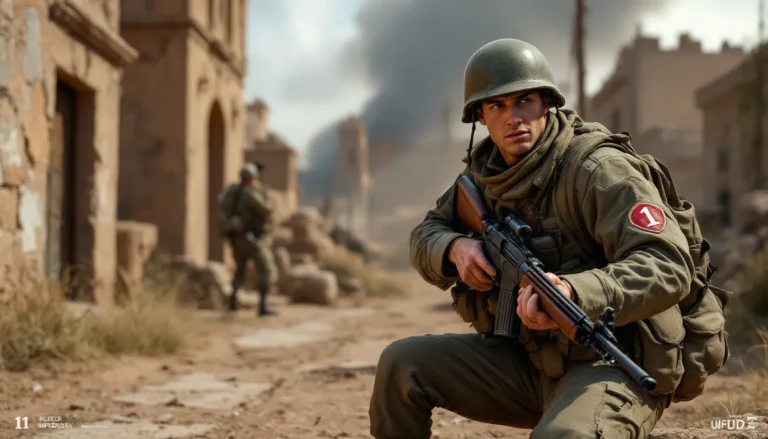
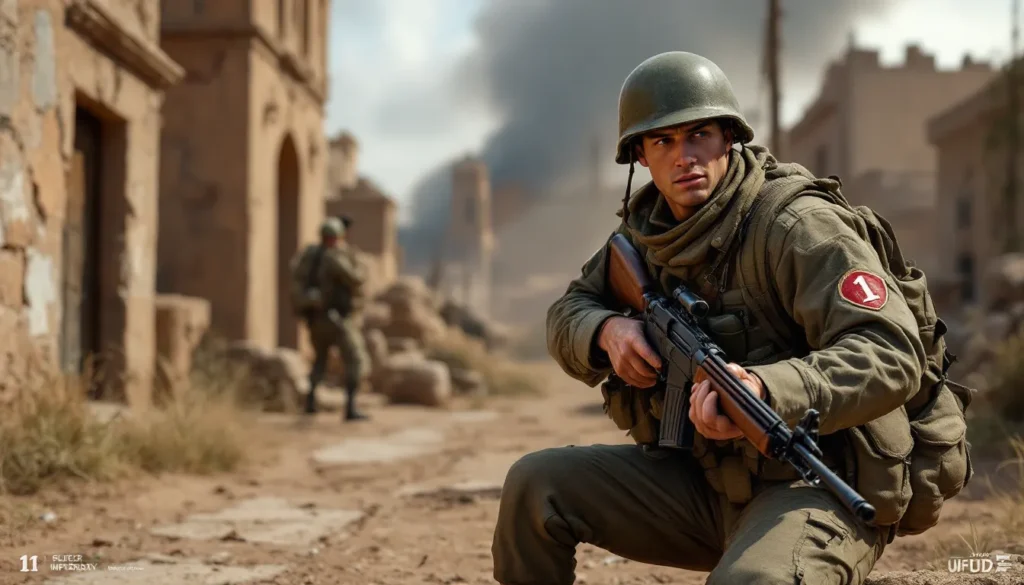
The title itself refers to the shoulder patch of the United States Army’s 1st Infantry Division, which features a red “1” on a shield. The developers at Treyarch spent considerable effort researching the division’s actual movements and battles, giving the campaign a sense of legitimacy that elevated the entire experience beyond a standard war shooter.
Platform Availability And Release Timeline
Big Red One launched in October 2004 on PlayStation 2 and Xbox, with a PC version following shortly after in February 2005. The game’s multi-platform approach meant that console and PC gamers could experience the campaign and multiplayer simultaneously, which was significant for building and maintaining an active player base.
PlayStation 2 and Xbox versions are still playable on original hardware, though multiplayer servers were shut down years ago. The PC version saw various patches and balance updates that tightened up the multiplayer meta over time. Original disc copies remain relatively affordable on the secondhand market, and emulation options exist for those looking to revisit the game.
In 2024, nostalgia drives renewed interest in Big Red One, with some players seeking it out through Call Of Duty Archives or competitive restoration projects. If you’re hunting down a copy, expect PS2 and Xbox versions to be easier to source than the PC release, which commands higher prices among collectors.
Campaign Mode: A Complete Walkthrough
Story And Mission Structure
The Big Red One campaign unfolds across 24 missions, each one representing a real engagement or campaign phase involving the 1st Infantry Division. The narrative is anchored by four squad members, Sergeant Powell, Corporal Zeke Jackson, Sergeant Joe Macarelli, and Private Lieutenant Voss, who provide character continuity and emotional weight throughout the journey.
What makes the structure work is pacing. Early missions introduce you to fundamental mechanics in relatively contained environments (clearing an airfield in North Africa, securing coastal positions), while later missions escalate in scope and complexity. By the time you reach European campaigns, you’re coordinating with squad mates, managing ammo scarcity, and pushing through heavily fortified positions.
The campaign doesn’t feature checkpoint-based progression like modern Call of Duty titles. Instead, it uses a mission-select system, allowing players to replay specific battles or jump to any completed mission. This approach encourages experimentation and helps newer players understand mechanics without punishing them for every mistake.
Tips For Completing Each Campaign Level
Early Missions (North Africa): Don’t rush. The opening levels teach fundamentals like ADS (aiming down sights), cover usage, and listening to squad callouts. Use your teammates as cover and let them absorb fire while you flank enemy positions. Grenades are plentiful early on, use them liberally to clear trenches and fortifications.
Mid-Campaign (Sicily & Italy): Enemy awareness increases significantly. Stick to buildings and natural cover: exposed running gets you killed fast. Sniper positions become common, so scan windows and rooftops before advancing. Tank levels add variety but demand patience, move methodically, use cover, and suppress enemies before pushing forward.
Late Campaign (Germany): This is where Big Red One reaches peak intensity. Expect dense enemy formations, machine gun nests, and mortar fire. Prioritize explosive weapons and use squad mates to suppress. Some levels (especially the final push) punish careless advancement. Save your best weapons for critical moments, and don’t hesitate to restart if you’re low on ammo.
Universal Tips:
- Listen to squad dialogue. Callouts like “Enemy at 12 o’clock” signal incoming threats.
- Conserve ammo on lower difficulties: higher difficulties require every shot to count.
- Use melee attacks only when enemies are isolated: it leaves you vulnerable.
- Pick up enemy weapons when your ammo runs dry, enemy KARs and MP40s keep you fighting.
Multiplayer Gameplay: Mastering Online Combat
Game Modes And Map Layouts
Big Red One’s multiplayer stripped away complexity in favor of pure gunplay fundamentals. There’s no killstreaks, no specialists, no abilities, just raw gunfights on carefully designed maps. The primary modes are Team Deathmatch, Search & Destroy, and Domination, each emphasizing different skills.
Team Deathmatch is straightforward: highest kills wins. Maps are built around natural choke points and sightline control. Power positions (like the roof on Brecourt or the central barn on Chateau) are contested from match start.
Search & Destroy demands coordination and economy. Both teams have limited lives per round: the attacking team plants a bomb while defenders prevent it. This mode separates casual players from competitive ones because communication and positioning matter infinitely more than spray-and-pray reflexes.
Domination requires map control. Three flags spread across the map: teams earn points for controlling zones. Success demands squad coordination and callout discipline, knowing which flag your team is pushing prevents overlapping coverage and wasted manpower.
Maps are tightly designed with clear sightlines, minimal vertical gameplay, and balanced spawning. Brecourt, Makin, Airfield, and Stalingrad are considered the franchise pillars, each has remained in online rotation due to their balanced design and competitive viability.
Weapon Selection And Loadout Strategies
Big Red One’s weapon sandbox is historically grounded, featuring actual WWII firearms with distinct characteristics. The meta shifts between spam-friendly automatic weapons and precision-based loadouts depending on map size and playstyle.
Assault Rifles: The M1 Garand and Kar98k dominate mid-range engagements. The Garand feels snappy with fast handling, while the Kar98k rewards precision. Both are viable at competitive levels: preference splits between spray-control specialists and tap-fire players.
Submachine Guns: The MP40 and Thompson excel in close quarters. The MP40 has superior handling and damage per magazine: the Thompson trades raw power for accuracy at range. On tight maps like Makin, SMG rushes are viable, on open maps, you’re a liability.
Sniper Rifles: The Mosin-Nagant and Springfield require skill but deliver one-shot eliminations. Quickscoping is possible but inconsistent: hardscoping dominant sightlines (like long corridors on Stalingrad) is more reliable.
Machine Guns: The MG42 and BAR provide suppressive fire. The MG42 has absurd magazine capacity but poor handling: the BAR is a hybrid weapon that functions as both assault rifle and LMG depending on engagement distance.
Optimal Loadouts:
- Aggressive: MP40 + Grenades + Melee Weapon
- Mid-Range: M1 Garand + Grenades + Secondary Rifle
- Defensive: MG42 + Grenades + Claymores
- Precision: Kar98k + Bolt-Action Rifle + Melee Weapon
Progression Systems And Ranking
Big Red One uses a straightforward rank progression system. Players earn experience from kills, objective captures, and eliminations, slowly advancing through military ranks from Private to General. Cosmetic rewards unlock at intervals, including soldier skins and weapon camo options.
Ranked ladders track seasonal performance on competitive servers. Top players congregate on specific servers, creating a tiered skill ecosystem. Reaching high ranks requires consistency, map knowledge, and weapon discipline, no gimmicks, no overpowered abilities.
Weapons And Equipment Guide
Best Weapons For Different Playstyles
Run-And-Gun Aggressive: The Thompson SMG is your best friend. It shreds at close range with manageable recoil. Pair it with a secondary M1 Garand for mid-range engagements. You’re looking to close distance fast and overwhelm enemies with volume of fire.
Medium-Range Duelist: Use the M1 Garand or Kar98k as your primary. Both reward accuracy and positioning. You’re holding angles, peeking sightlines, and winning trades through discipline. Add a sidearm (Colt 1911 pistol is serviceable) for close encounters you didn’t anticipate.
Long-Range Controller: MG42 mounted on a headglitch or Mosin-Nagant hardscoped on a dominant sightline. You’re suppressing routes and denying map areas. This playstyle requires patience and teammate coordination: you’re not racking kills, you’re controlling territory.
Hybrid Operator: The BAR is criminally underrated. It functions as an assault rifle, carbine, and light machine gun depending on range and stance. Tap-firing at distance, bursting medium range, and spraying close quarters, the BAR does it all without excelling at anything, making it versatile for pub matches where playstyle shifts constantly.
Objective Specialist: For Search & Destroy bomb plants or Domination flag captures, prioritize mobility. MP40 or Thompson primary, with grenades and a combat knife. You need to close distance to objectives before defenders congregate.
Equipment And Perks Overview
Big Red One’s equipment roster is minimal compared to modern Call of Duty entries, which forces deliberate choices. The meta revolves around grenades, land mines (claymores), and smoke for movement.
Offensive Equipment:
- Grenades: Your primary tool for clearing rooms and bunkers. They bounce predictably: learn throw angles.
- Stick Grenades (German): Identical functionally to allied grenades: purely aesthetic choice.
- Land Mines/Claymores: Defensive tools for holding positions and denying flanks. Predictable but effective on narrow corridors.
Tactical Equipment:
- Smoke Grenades: Enable movement across open terrain without sniper exposure. Valuable on maps like Chateau where traversing the center is suicide.
- Signal Flares: Illuminate areas briefly, useful for flushing out snipers or confirming enemy positions.
Perks don’t exist in Big Red One’s multiplayer. The game strips away specialization systems entirely, forcing all players to compete on identical footing. This design philosophy prevents power-creeping and keeps the meta grounded in weapon skill and positioning, not loadout advantages.
Why Big Red One Remains A Fan Favorite
Legacy And Impact On The Franchise
Big Red One established templates the franchise still follows today. The four-squad-member narrative structure became the backbone of Call of Duty storytelling for years. The grounded WW2 setting, rich with historical detail, influenced later entries like Call of Duty: WWII (2017) and the recent Warzone Pacific integration.
Multiplayer-wise, Big Red One proved that complexity isn’t mandatory for engaging competitive play. Stripping away progression gimmicks and specialization systems created a meritocracy where weapon skill, positioning, and teamwork determined winners. The simplicity was strength, new players could jump in and understand the meta within a few matches, while veterans could develop techniques that remain viable across years of play.
The game also demonstrated franchise longevity. Big Red One’s multiplayer remained viable for over a decade after release, with dedicated communities maintaining private servers and organizing competitive tournaments. When Nazi Zombies Call of Duty later became a staple mode, the foundation was already laid for asynchronous gameplay experiences alongside traditional multiplayer.
Industry recognition cemented Big Red One’s status. Coverage from IGN, GameSpot, and other major outlets praised the campaign’s authenticity and multiplayer balance. The game appeared on “best of” lists for years, validating the creative direction Treyarch had taken.
Comparison With Modern Call Of Duty Titles
Comparing Big Red One to contemporary releases (like Call of Duty: Modern Warfare III or Black Ops 6) reveals philosophical shifts in franchise design. Modern titles prioritize accessibility through aggressive aim-assist, lower TTK (time-to-kill), and killstreak-based progression. Big Red One demands precision: headshots matter, positioning determines survivability, and team play is rewarded through objective scoring, not scorestreaks.
Modern campaigns feature globe-trotting narratives with multiple protagonists and cinematic spectacle. Big Red One focuses on a single division’s ground-level perspective, prioritizing tactical detail over Hollywood grandeur. Both approaches work, but they target different storytelling sensibilities.
When When Will Call of Duty Be on Game Pass? questions arise, Big Red One’s absence from modern distribution reflects its age and licensing complexity (historical soldier likenesses, period-authentic weapons). Modern titles benefit from contemporary licensing and active development support.
Graphically, Big Red One looks dated. The PS2 and Xbox versions run 480p: the PC version offers superior fidelity but still shows age. Modern titles leverage current-gen hardware for cinematic visuals, though some argue authenticity is lost in the process. The gameplay remains timeless, but. Jump between Big Red One and Black Ops 6, and while visual quality jumps dramatically, the core gunplay philosophy, positioning, discipline, aim, translates directly.
Metagame-wise, Big Red One’s simplicity contrasts sharply with modern progression systems. No Battle Pass grind, no cosmetic unlocks tied to playtime, no seasonal content treadmill. You play to win matches and perfect your craft. This stripped-down approach appeals to competitive traditionalists but alienates modern players accustomed to constant progression metrics.
The verdict: Big Red One represents a purer, more authentic take on military FPS gameplay. Modern Call of Duty titles are more polished, accessible, and feature-rich. Neither is objectively superior, they serve different audiences and eras. For those seeking to understand the franchise’s roots and competitive fundamentals, Big Red One remains essential. For casual players wanting polish and progression, modern entries deliver. The Call Of Duty Cover Art across the franchise evolution tells this story visually, from grounded soldier photography to stylized operators and futuristic warriors.
Conclusion
Call of Duty: Big Red One stands as a masterclass in design restraint and historical authenticity. Two decades after release, the campaign remains engaging, the multiplayer foundation is proven, and the competitive legacy is undeniable. It’s a game that understood its purpose: deliver tight gunplay, compelling narrative, and balanced competitive spaces without unnecessary complexity.
For modern gamers discovering Big Red One, expect fundamentals over flash. The visuals are dated, the mechanics feel deliberate rather than arcade-y, and the pacing respects player intelligence. The campaign delivers meaningful engagement with WWII history through interactive narrative. Multiplayer demands positioning, aim discipline, and teammate awareness, attributes that transcend generational gaps.
Rediscovering Big Red One offers perspective on franchise evolution. Whether you’re a veteran returning to roots or a newer player interested in Call of Duty history, the experience remains worthwhile. The game’s influence on modern shooters is immeasurable, and playing the source material clarifies why the franchise became dominant. For competitive players seeking grounded gunfights and campaign enthusiasts wanting historically-rooted storytelling, Big Red One delivers on both fronts, no compromise, no filler, just pure Call of Duty fundamentals.