Table of Contents
ToggleCall of Duty: World At War stands as one of the most pivotal entries in the franchise, a brutal, uncompromising take on World War II that redefined what console shooters could be. Released in 2008 by Infinity Ward and Treyarch, this game didn’t just capture the chaos of WWII: it fundamentally shifted the competitive FPS landscape. Whether you’re curious about why Call of Duty WW1 and earlier WW2-era shooters pale in comparison, or you’re wondering what made Call of Duty: World At War PS4 players still fire it up years later, this guide breaks down everything from campaign to multiplayer to the mode that started a cultural phenomenon: Zombies. We’ll explore the weapons, maps, mechanics, and strategies that made this title a benchmark for the genre, and explain why Call of Duty WAW remains a reference point for modern shooters.
Key Takeaways
- Call of Duty: World At War redefined console FPS gameplay in 2008 by introducing ruthless competitive multiplayer, create-a-class customization, and the Zombies mode—a bonus feature that evolved into a billion-dollar franchise.
- The dual-narrative campaign split between the Pacific War and Eastern European theater, featuring Gary Oldman as Sergeant Reznov, set a new standard for storytelling weight and moral complexity in military shooters.
- Weapon balancing and role-based loadout theory became core to FPS design philosophy, with distinct weapons like the M16, MP40, and Mosin-Nagant rewarding different playstyles from aggressive rushers to strategic snipers.
- Map design excellence—from Nuketown’s tight chaos to Castle’s long sightlines—taught players foundational FPS principles like positioning, spawn mechanics, and audio cues that remain relevant across modern shooters.
- Call of Duty: World At War’s mechanical innovations, including perks, equipment strategy, and Search and Destroy competitive modes, shaped esports infrastructure and competitive gaming terminology that persist over 17 years later.
Game Overview And Historical Significance
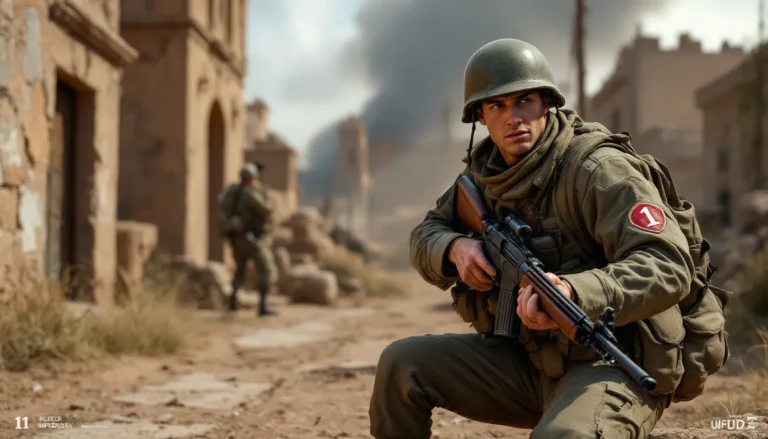
Call of Duty: World At War arrived in November 2008 as the fifth major installment in the franchise, and it immediately set itself apart through raw, visceral presentation. Unlike sanitized military shooters, Treyarch’s vision embraced the brutality of the Pacific and Eastern European theaters. The game shipped on PC, Xbox 360, and PS3, with a PS4 remaster released years later for those wanting updated graphics.
Historically, Call of Duty WW1 and earlier World War II iterations didn’t crack the same cultural force as World At War did. This game launched with 16 multiplayer maps, support for up to 18 players online, and a campaign that didn’t pull punches. The introduction of the Zombies mode in the map “Nacht der Untoten” wasn’t marketed heavily at launch, it was tucked away as a bonus arcade mode, yet it became the foundation for one of gaming’s most enduring spin-off franchises. By 2025, Zombies has spawned dedicated game modes, seasonal content, and millions of hours played across multiple Call of Duty titles.
The competitive multiplayer landscape also shifted because of World At War. The game introduced create-a-class customization with perks and equipment, making loadout theory a core part of FPS discourse. Players could build wildly different classes, from spray-and-pray SMG rushers to long-range sniper controllers, forcing strategy beyond pure aim.
Campaign Story And Setting
The campaign splits between two interconnected narratives: the Pacific War and the Eastern European offensive. You play as Private C. Miller in the Pacific, witnessing the island-to-island brutality of battles like Makin Island and Iwo Jima. Then you shift to Soviet Sergeant Reznov fighting toward Berlin, experiencing the war’s other side. This dual perspective was storytelling innovation at the time, most shooters stuck to a single character arc.
Reznov becomes the narrative anchor. Voiced by Gary Oldman, he’s a weathered, ruthless soldier determined to reach Berlin and end the Nazi threat. The campaign doesn’t shy away: you’ll witness war crimes, execute prisoners, and face moral choices that linger. Levels like “Vendetta” put you in the scope of a sniper mission, while “Downfall” closes the campaign in the rubble of Berlin itself.
Difficulty scales authentically. On Veteran (the hardest setting), enemies throw grenades with devastating precision, and cover becomes your lifeline. The AI doesn’t play fair, it swarms, flanks, and punishes careless rushes. Checkpoint systems are forgiving enough that you won’t repeat 15 minutes of content over a single mistake, but tight enough to demand focus.
Story-wise, the campaign isn’t just about kinetic spectacle. It explores the psychological weight of combat through dialogue, cutscenes, and environmental storytelling. When Reznov finally reaches Hitler’s bunker, the payoff is cathartic in a way that purely mechanical shooters rarely achieve.
Multiplayer Modes And Maps
Core Game Modes
The multiplayer suite covers five core modes that defined tactical gameplay for a generation:
Team Deathmatch (TDM) is the foundation, two teams, 18 players total (9v9), respawning freely. Map control and callouts matter more than raw aim.
Search and Destroy (S&D) is the competitive standard. One team plants a bomb: the other defends. No respawns per round. This mode created the “clutch 1v5” moments that fueled esports interest and Twitch streaming.
Domination splits the map into three flag zones (A, B, C). Teams earn points by holding flags. It rewards positioning and team coordination, lone wolves get punished quickly.
Headquarters designates a control point that moves periodically. Holding it earns points. It’s frantic, objective-focused, and punishes camping.
Free-for-All is pure chaos: 4-8 players, everyone’s an enemy, highest kills wins. No team mechanics. It’s brutal for testing gun skills but brutal for teamwork practice.
Each mode rewards different skills. S&D demands discipline and communication. Domination requires map awareness. TDM emphasizes aim and positioning. Rotating through modes keeps the skill ceiling high and gameplay fresh.
Notable Multiplayer Maps
The 16 launch maps were expertly designed for the weapons and pace of 2008. Here are the standouts:
Nuketown (a suburban Nevada test site) became so beloved that Treyarch has reincluded it in nearly every Call of Duty game since. Tight quarters, three distinct lanes, and incredible spawn-trap potential made it both chaotic and skillful.
Hanoi is a tight urban map through Vietnamese streets. Close-quarters gunfights define it. Proper grenade use and corner-checking are essential. Campers can lock down specific buildings, but aggressive teams can flush them out.
Cracked spans a industrial dam structure with vertical elements. Sniper nests overlook the main courtyard, but aggressive players can flanking routes. The map punishes tunnel vision, always check your flanks.
Castle is a German fortress with long sightlines. Snipers dominate here, but SMG players can use interior corridors to catch unaware enemies. Map knowledge is survival.
Firing Range simulates a military shooting range. Three main lanes with a sniper-heavy middle. Fast-paced and rifle-friendly. Newer players often struggle with the open sight lines, positioning saves lives.
Each map shapes meta differently. Nuketown favors aggressive close-range loadouts. Hanoi and Castle punish exposed movement. Understanding map design teaches broader FPS principles that carry across all shooters.
Zombies Mode Explained
Zombies mode wasn’t supposed to be the phenomenon it became. Treyarch included it as an arcade Easter egg in the map “Nacht der Untoten,” expecting modest engagement. Instead, players discovered a wave-based survival mode where undead Nazi soldiers shamble toward them in increasing numbers. Each round, zombies spawn faster and tougher. Die, and it’s game over.
The mode has since evolved into a franchise pillar, but the original formula remains. Players start with a pistol and basic health. Killing zombies earns points (25 for a kill, 100 for a headshot). Points buy weapons from wall-mounted racks, open doors to new areas, and activate power-ups. Early rounds are manageable, waves 1-5 you can solo comfortably. By round 15, you’re scrambling.
Strategy emerges naturally. Horded zombies die faster in tight corridors. Sprint paths let you kite (run in circles while zombies follow in a line, burning through their melee attacks without hitting you). Coordinated teams designate traders, someone who opens new areas, while others lock down strong positions.
Power-ups are crucial. Nuke clears the entire map instantly and refunds all points spent. Double Points makes every zombie kill worth double money. Max Ammo refills all weapons. Insta-Kill makes every gun a one-shot for 30 seconds. Timing power-up collection separates casual attempts from serious runs.
The mode taught cooperative gameplay principles that modern shooters still lean on. Zombies demanded communication, loadout synergy, and adaptation. It’s why Zombies players often excel at team-based competitive modes, they’ve already learned to play around teammates’ roles.
By World At War’s lifecycle, Zombies maps expanded beyond launch, though the core mechanic remained the survival formula that still defines it.
Gameplay Mechanics And Weapons
Weapon Progression And Loadouts
World At War uses a rank-based unlock system tied to gun categories, not individual weapons. As you level (max rank 55), you unlock attachments and new guns. Early on you’re forced into starting weapons, the M1 Garand rifle, pistols, grenades. But by rank 15-20, meaningful variety opens up.
Assault Rifles like the M16 and Mosin-Nagant offer balanced stats. The M16 has high damage but slower fire rate. The STG44 has lower damage but rapid fire. Newcomers gravitate toward the M16’s stopping power: experienced players often prefer the STG44’s capacity for longer engagements.
Submachine Guns (MP40, Type 100) excel in close quarters. They trade range for magazine capacity and fire rate. Spray an entire magazine in someone’s face at 10 meters and they’re dropping. Try it at 40 meters and you’re whiffing shots.
Sniper Rifles (Mosin-Nagant, SPR) one-shot to the chest at any range. They reward positioning and patience. Rush with a sniper and you’re a liability. Hold a power position (a sightline covering key map areas) and you’re a threat that entire teams must respect.
Shotguns (Trench Gun) are ultra-close-range powerhouses. You won’t use them much, and they’re finicky online (lag affects melee weapon hit registration), but in the right moment they’re devastatingly fun.
Light Machine Guns (Browning M1919, DP-27) have high capacity and suppressive fire. They’re slow to switch and reload, but sustained fire pressure forces enemies into bad decisions.
Loadout building is about role definition. A sniper’s class prioritizes a long-range weapon with optics. An SMG rusher prioritizes mobility and close-range firepower. A support player might run an LMG with a launcher secondary. Treyarch’s create-a-class system let players theorize endlessly, which perk combo synergizes? Is this enough ammo for late rounds?
Perks And Equipment Strategy
Perks are passive bonuses that define playstyle. You pick three in your loadout.
Sleight of Hand reduces reload time by 30%. It’s meta for aggressive players who mag-dump often.
Steady Aim tightens hip-fire spread and increases hip-fire accuracy. Hip-fire (shooting without ADS, “aiming down sight”) is viable at closer ranges, so this perk shines for SMG and shotgun players.
Flak Jacket reduces explosive damage by 30%. Grenades and rocket launchers become less threatening. It’s non-negotiable on maps where grenades are spam (Nuketown). Ignore it on open maps like Firing Range.
Hardened ups bullet penetration and reduces damage from explosives slightly. If enemies hide behind thin cover, you can shoot through. This perk is meta on map layouts with lots of cover.
Ghost masks you from enemy radar when moving. Stationary players still show on enemy radars (the mini-map they see), but you’ll remain invisible when sprinting. Combined with SMG play, Ghost is phenomenal for flanking.
Hacker lets you spot enemy equipment and explosives through walls. It’s niche but punishes teams that rely on claymore traps and C4.
Secondary perks offer utility: Warlord adds extra equipment (grenades, special weapons). Scout gives you a mini-map, making you a de facto team leader. Dexterity speeds up weapon switching (critical if you’re running a sniper + pistol combo).
Equipment rounds out the class. Frag Grenades are versatile, damage and area denial. Semtex stick to walls and players (better for precise placement). C4 is remote-detonated (dominates cramped areas). Claymore mines are motion-triggered (defend positions automatically). Tomahawks are melee projectiles (absurdly satisfying when they connect).
Equipment teaches positioning. Claymores force enemies to deviate from predictable routes. Grenades punish clustered enemies. Tomahawks reward timing and prediction. Teams with smart equipment placement control map flow.
Tips For Improving Your Game
Campaign Strategies
Campaign difficulty spikes unpredictably. Some checkpoints are trivial: others demand discipline. Here’s how to push through:
Play methodically on Veteran. Rush and you’ll respawn. Use cover religiously. Check corners. Let enemy AI burn through ammo before you peek. Patience kills faster than aggression on the hardest difficulty.
Understand your arsenal. Some missions give you a sniper rifle, use it. Others supply you with LMG ammunition, abuse suppressive fire. The game hands you tools: use them correctly for that checkpoint. Ignore a tool and you’re suffering unnecessarily.
Grenade placement matters. Enemies cluster in predictable spots. A grenade lobbed into a room where five enemies hide clears it instantly. Listen for enemy voices and footsteps. If you hear noise behind a door, grenade first, then enter.
Use allies strategically. Your AI squad draws enemy fire. While enemies focus on them, you flank. If you’re pinned, your ally’s suppressive fire might be the window you need to move.
Learn checkpoint positions. Dying repeatedly teaches you where the game saves. Some checkpoints are 10 seconds before a brutal section: others are minutes back. Identify brutal sections and practice them separately, don’t rage-quit an entire mission because of one bad setup.
Multiplayer Tactics For Competitive Play
Multiplayer is where World At War truly challenges you. Campaign AI follows predictable patterns. Players don’t.
Map knowledge is foundational. You need to know: where spawns are, which routes have cover, where power positions exist, and which areas are death traps. Spend your first 10 matches exploring. Don’t obsess over kills: obsess over map layout. A player who dies knowing the map is more useful than someone with 25 kills who doesn’t understand geography.
Spawn mechanics punish carelessness. When teammates die, enemies spawn closer to teammates’ death locations. If your whole team dies in one area, the next enemy push will come from unexpected angles. Spread your team across the map. Don’t clump.
Aim sensitivity is personal. Higher sensitivity (camera turns faster) suits aggressive close-range players. Lower sensitivity suits snipers and long-range riflers. Gaming reviews from major outlets often test sensitivity settings to advise new players. Experiment during warmup matches. Don’t change mid-season, muscle memory matters.
Headshots are efficiency. A headshot with a rifle is a one-shot kill. A bodyshot isn’t. Training yourself to aim at head level, not chest or waist, reduces your TTK (time-to-kill) dramatically. Crosshair placement (keeping your crosshair at head height as you move) is learned through repetition.
Audio cues win fights. Footsteps, reload sounds, and gun cracks tell you where enemies are. Invest in headphones. Mute voice comms if your team is screaming callouts you don’t need. Listen. A skilled player hears an enemy before seeing them.
Positioning beats aim. You could be the best shooter alive, but if you’re holding a position that five enemy angles can hit, you’re dead. Hold positions that force enemies into your line of fire while you’re hidden. A position that offers you three cover options but exposes enemies is superior to any position with superior sightlines.
Loadout flexibility matters. You spawn with one loadout, but you can swap mid-game by picking up dropped weapons. If a sniper is locking down one corridor, drop your SMG and swap to the sniper you find. Adapt to what the game offers.
Objective play compounds advantages. Holding a Domination flag gives you map control and points. Pushing the bomb site in S&D forces a confrontation on your terms. Players obsessed with kills often ignore objectives and lose even though higher K/D ratios. Play the objective, kills follow naturally.
Legacy And Impact On The FPS Genre
Call of Duty: World At War’s influence extends far beyond 2008. While Call of Duty 5 (the franchise’s fifth entry) wasn’t a critical darling compared to its successor Modern Warfare, its mechanical innovations and Zombies mode shaped everything that followed.
Competitive infrastructure: World At War didn’t invent esports FPS, but it legitimized console competitive gaming. Search and Destroy matches featured communication so intense, callout terminology from this game (“rotating,” “planted,” “multi-kill”) entered gaming vocabulary permanently. Tournaments like MLG events built viewership around World At War matches.
Weapon balancing philosophy: The game taught developers about meta. Some weapons were objectively superior (M16, MP40), creating balance debates that persist in modern shooters. Patch updates that nerfed overpowered guns and buffed underused ones showed that iterative balance could keep a game fresh across years, not just months.
Zombies franchise: Without Nacht der Untoten, there’s no Zombies culture. Treyarch’s follow-up Call of Duty games (Black Ops, Black Ops II) expanded Zombies into a full-fledged mode. Game Informer coverage of Zombies evolution highlights how a bonus mode became a staple. Modern Zombies games like Cold War feature narrative campaigns, character progression, and seasonal content. The foundation? World At War’s simple wave-based survival.
Create-a-class customization: Before World At War, loadout theory wasn’t really a thing. This game proved that letting players build wildly different classes incentivized theorycrafting and replayability. Every modern FPS now borrows this framework.
Audio design as gameplay: The crisp gunshot sounds, distant explosions, and distinct character voices set a standard for immersion. You could close your eyes and know what gun fired based on sound alone. Modern shooters obsess over spatial audio for this reason, World At War proved it matters.
Tone and narrative weight: Campaign storytelling in shooters was often expendable fluff before 2008. Reznov’s arc, the visceral Pacific campaign, and the willingness to depict war crimes (rather than sanitizing conflict) raised expectations for narrative. Games became willing to say “war is brutal” instead of “war is cool.” GameSpot’s retrospectives on WW2 shooters often credit World At War for setting this tone.
By 2025, World At War still holds up mechanically. The servers are long offline, but the campaign remains playable and challenging. Speedrunners have optimized every level. Zombies communities still theorize around its original mechanics. The game proved that solid mechanics, thoughtful map design, and willingness to innovate (Zombies) create staying power that graphics and marketing alone can’t achieve.
Conclusion
Call of Duty: World At War stands as a watershed moment in FPS design. It took the franchise’s already-solid foundation and added two permanent pillars: ruthless competitive multiplayer and the Zombies phenomenon. The campaign delivers genuine storytelling weight, the weapons feel distinct and balanced, and the maps became templates that Treyarch would return to for years.
For new players discovering it today, World At War offers clean, punishing gameplay that teaches FPS fundamentals without modern convenience features (aim assist, slide mechanics, respawn timers). The skill ceiling is steep, but the ceiling exists for those willing to climb it. Speedrunners find perfect level design. Multiplayer competitors discover the DNA of tactical shooters. Zombie enthusiasts glimpse where a billion-dollar franchise began.
The game’s legacy isn’t its graphics or even its setting, it’s the systems that still define Call of Duty 17+ entries later. Create-a-class customization, balanced weapon variety, accessible-yet-complex perks, and the Zombies mode prove that design philosophy outlasts technology. World At War shaped what FPS players expect from the genre. That impact alone secures its place in gaming history.