Table of Contents
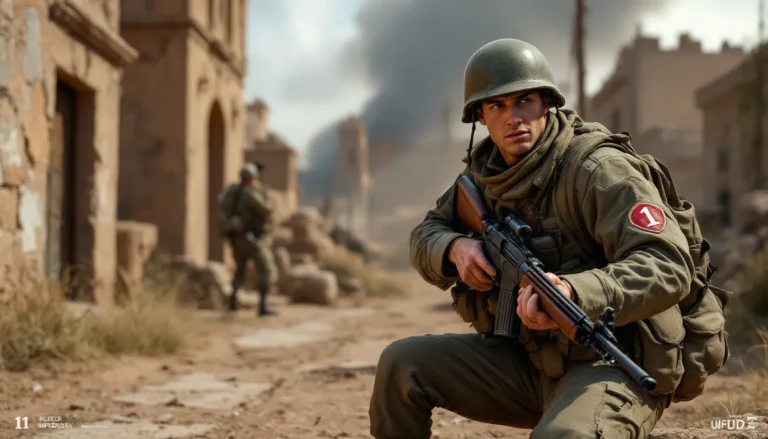
ToggleCall of Duty Ghosts dropped back in 2013 as a bold reimagining of the franchise, ditching the Modern Warfare and Black Ops continuity to craft an entirely new narrative. The campaign follows a grittier, more personal story centered on a specialized military unit fighting against the rising superpower known as The Federation. Whether you’re revisiting the Call of Duty Ghosts campaign for nostalgia or tackling it for the first time, this guide breaks down the story, characters, missions, and tactics you need to dominate every difficulty level. From the opening briefing through the final confrontation, we’ll walk you through everything that makes this campaign tick, and what sets it apart from other entries in the series.
Key Takeaways
- Call of Duty Ghosts campaign delivers a 5–7 hour grounded narrative focused on an elite squad fighting The Federation, with a father-son dynamic between Elias and Hesh that adds emotional depth to the story.
- Master the campaign by utilizing cover mechanics, squad commands, and tactical positioning—letting squad members suppress enemies while you flank is essential for surviving higher difficulties.
- The Call of Duty Ghosts campaign features 14 missions with diverse scenarios from stealth infiltrations to large-scale assaults, each rewarding adaptive tactics and strategic weapon selection.
- Weapon loadouts significantly impact mission success; early missions favor balanced assault rifles with close-range secondaries, while late-game scenarios demand aggressive shotgun combinations for close-quarters federation encounters.
- Completing the campaign on Veteran difficulty unlocks Extinction mode and reveals the full impact of the twist ending, making a replay worthwhile for players seeking to uncover the story’s complete context.
What Is Call Of Duty Ghosts Campaign?
Call of Duty Ghosts’ campaign is a single-player narrative experience that takes place in a near-future timeline where geopolitical tensions have erupted into full-scale warfare. Unlike previous Call of Duty entries that felt like military action movies, Ghosts leans into a more grounded, squad-focused narrative. You’ll play through 14 missions as part of an elite task force, experiencing the campaign’s story from multiple perspectives and across diverse global locations.
The campaign spans roughly 5–7 hours depending on difficulty and playstyle, making it one of the shorter modern Call of Duty stories. But, Ghosts compensates with tight pacing, memorable set pieces, and a twist ending that recontextualizes the entire narrative. The game is available on PC, PS3, PS4, Xbox 360, Xbox One, and Wii U, so accessibility isn’t an issue. If you’re jumping in fresh, expect a story-driven experience with solid gunplay mechanics, squad commands, and environmental variety, not just mindless shooty-bang action.
Story Overview and Setting
The Rise of The Federation
The Ghosts campaign kicks off in the 2020s with a catastrophic event: a massive orbital strike devastates the United States’ military infrastructure, power grid, and economy in one fell swoop. This attack is orchestrated by The Federation, an alliance of nations led by a charismatic and ruthless military commander named Gabriel Rorke. With America crippled and vulnerable, The Federation launches a full-scale invasion.
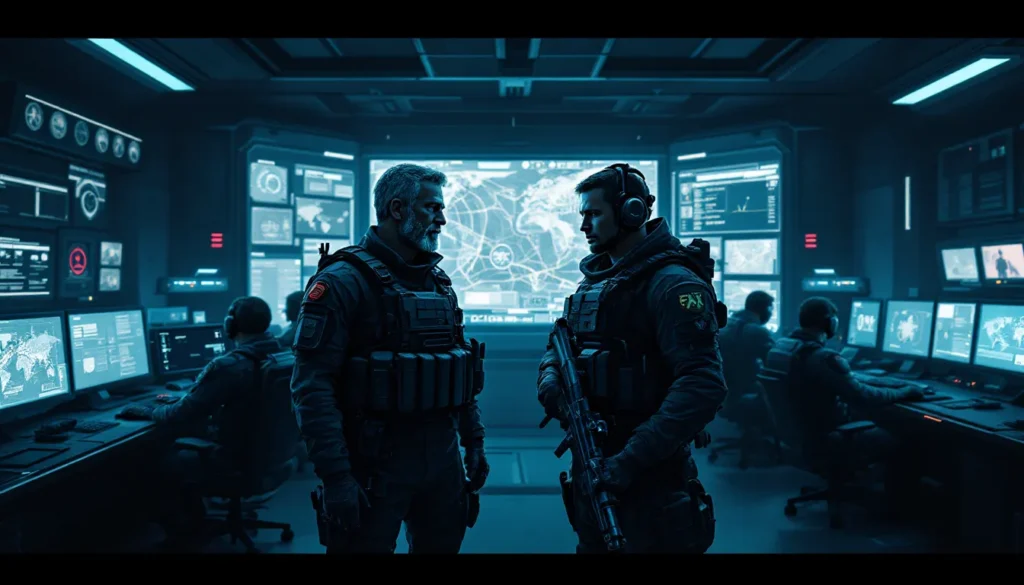
The U.S. military response is fragmented initially, but a specialized unit called Ghosts emerges from the shadows to mount a counteroffensive. Unlike traditional soldiers, Ghosts operate with autonomy, advanced technology, and a willingness to operate beyond conventional rules of engagement. Their objective: destabilize The Federation from within, sabotage their operations, and eventually restore balance to a world teetering on the brink of collapse. The Federation’s motivations are rooted in anti-American sentiment, resource control, and a desire to reshape global power structures, making them a more ideologically complex antagonist than typical Call of Duty villains.
Ghost Team Origins
The Ghosts unit itself has a storied history. Led by Lieutenant Elias Walker, the team earned their name not from their stealth tactics alone, but from their ability to operate as ghosts, unseen, unheard, and untraceable. Before the campaign’s events, the Ghosts were already legendary, but the orbital strike forces them into a desperate final mission: stop The Federation before they consolidate control over North America.
The unit’s composition includes soldiers from different backgrounds and specializations. Elias Walker is the grizzled veteran and leader, while his son Hesh serves as a soldier-in-training. The dynamic between father and son drives much of the campaign’s emotional weight. Experts across esports and gaming communities have noted that this father-son angle makes Ghosts’ narrative feel more intimate than the sprawling military fiction of earlier Call of Duty titles. The supporting Ghosts members bring specialized skills: Merrick (leadership and strategy), Keegan (assault tactics), and Roach (from Task Force 141, the legendary unit from Modern Warfare 2, making a brief but impactful appearance). This roster creates a believable special ops team with clear roles and chemistry.
Main Characters and Campaign Cast
Roach and Logan Walker
Roach is a familiar face to anyone who played Modern Warfare 2. He was part of Task Force 141 and a trusted operator under “Ghostface” Lieutenant Simon Riley. In Ghosts, Roach appears during the campaign’s opening sequences, serving as a connection to the franchise’s storied past. His presence in the early missions grounds the narrative in the larger Call of Duty universe, reminding players of the legendary Task Force 141 and the events that led to the world’s current state.
Logan Walker is Hesh’s younger brother and doesn’t appear in the playable campaign, but he’s mentioned multiple times as a ghost team member who operates alongside Hesh during certain events. Understanding the Walker family dynamic, Elias as the father figure, Hesh as the direct soldier, and Logan as the off-camera operative, helps contextualize the personal stakes driving the narrative forward.
Hesh and Elias Walker
Hesh (David Walker) is the primary protagonist players embody throughout most of the campaign. As Elias’s son, Hesh carries the weight of both legacy and proving himself in a unit led by his father. Unlike typical Call of Duty protagonists who are already elite soldiers, Hesh starts as a soldier still finding his footing within Ghost Team. This progression, from inexperienced to battle-hardened, gives the campaign emotional stakes beyond just “win the war.”
Elias Walker is Hesh’s father and the commanding officer of Ghost Team. A scarred, experienced soldier, Elias embodies the gruff military archetype, but his dialogue reveals genuine care for his son’s survival and success. Elias makes critical decisions throughout the campaign that shape the narrative’s direction. His character arc, particularly in the campaign’s final act, serves as the emotional core of Ghosts’ story and is responsible for one of the most shocking moments in the entire campaign.
Supporting Characters
The supporting cast rounds out the Ghost Team roster. Merrick serves as the tech expert and strategic mind, often providing intel and mission briefings. Keegan is the aggressive combat specialist, known for direct assault tactics and battlefield awareness. Ajax rounds out the unit as an additional operator with specialized demolitions expertise. Each character has distinct voice acting and personality, making squad interactions feel natural rather than generic.
The antagonist, Gabriel Rorke, leads The Federation with calculated precision. Rorke is a former American soldier who became disillusioned with the U.S. government and chose to align with The Federation. His personal vendetta against the American military, and specifically against Ghosts, drives the campaign’s conflict beyond mere geopolitical struggle. Players seeking deeper character analysis and story breakdowns often praise Ghosts for giving its antagonist genuine ideological motivation rather than portraying him as a one-dimensional villain.
Campaign Missions Breakdown
Early Campaign Missions
The campaign opens with a rescue operation in the Georgian-Russian border region. Mission 1: “Ghost” throws players directly into action, establishing the Ghosts unit’s capabilities and introducing Hesh as a character. This mission is relatively straightforward: infiltrate, secure, and extract. The gameplay here emphasizes stealth over brute force, teaching players the importance of tactical awareness and use of cover.
Mission 2: “Brave New World” escalates the action with a direct assault on Federation strongholds. Players engage in firefights across Middle Eastern terrain while supporting squad members. The mission introduces squad commands, ordering teammates to suppress enemy fire, flank positions, or provide covering fire. These mechanics are core to Ghosts’ campaign experience.
Mission 3: “Illegal Orders” takes place in South America and marks the campaign’s first major story beat. The tone shifts here from “special ops” to “war crimes are on the table.” Characters discuss controversial orders and the moral ambiguity of their actions. This mission begins establishing that Ghosts operate in the gray areas of warfare, setting up thematic elements that pay off in the final act.
Mid-Campaign Turning Points
Mission 4: “End of the Line” features a train assault sequence where players derail Federation reinforcements. The moving platform forces players to manage positioning and timing while engaging enemies, creating a dynamic combat scenario different from typical indoor arenas.
Missions 5–8 escalate the global conflict significantly. “Clockwork” tasks players with disabling Federation weapon systems. “Legends Never Die” introduces Roach and provides a connection to Task Force 141, reinforcing narrative continuity across the Call of Duty universe. “Atlas Falls” marks a major turning point where the Ghosts execute a high-profile operation with lasting consequences.
By Mission 8: “Stuck in the Mud,” the campaign’s tension is at maximum. The Federation has consolidated power, and Ghosts are facing increasingly difficult opposition. This mission introduces aggressive enemy AI that demands better weapon selection and tactical thinking from players.
Final Missions and Climax
The final three missions escalate intensity dramatically. Mission 12: “Homecoming” brings the war directly to American soil. Players defend against Federation invasion forces on U.S. territory, making the stakes tangible. The mission design emphasizes defensive positioning and resource management, ammunition is scarcer, requiring players to make shots count.
Mission 13: “The Ghost Killer” is the penultimate mission and delivers the campaign’s major plot twist. Without spoiling it entirely, this mission forces a confrontation with the source of The Federation’s power and introduces a shocking revelation about the antagonist’s connection to Ghost Team. Gameplay-wise, it’s fast-paced with heavy emphasis on combat encounters.
Mission 14: “Severed” is the finale. Players battle through a final Federation stronghold toward a personal confrontation with Gabriel Rorke. The mission combines everything learned throughout the campaign: squad coordination, weapon switching, tactical positioning, and aggression. It’s relatively short but emotionally impactful, ending on a cliffhanger that suggests sequels (which Ghosts Multiplayer eventually expanded upon).
Gameplay Mechanics and Features
Combat and Controls
Ghosts’ campaign uses the standard Call of Duty control scheme players expect: ADS (aim-down-sights) on trigger/aim button, sprint on controller bumpers, and grenade throws on the secondary button. The feedback is responsive and fluid. Aiming down sights is snappy, TTK (time-to-kill) against standard enemies is quick, encouraging aggressive rather than passive play.
One unique feature is the Dynamic Difficulty scaling in campaign. While this isn’t formally advertised, players will notice difficulty spikes based on their performance. Perform too well in a section, and enemy accuracy and aggression increase. This keeps the campaign challenging even on lower difficulties, preventing steamrolling through content.
Cover mechanics are critical to survival. Unlike some Call of Duty campaigns that reward run-and-gun tactics, Ghosts punishes exposed positioning. Use cover effectively, peak out for shots, then retreat. Staying in cover too long gets you flanked, the AI is smart enough to attempt repositioning when pinned down.
Weapon Variety and Loadouts
The campaign features a solid weapon arsenal representing modern and near-future military hardware. Key weapon classes include:
Assault Rifles: The FAMAS and AK-12 are reliable choices. The AK-12 has higher magazine capacity with slight recoil trade-off. Use assault rifles as your primary for balanced performance across all mission types.
Sniper Rifles: The L118A1 appears in several missions designed for long-range elimination. Effective for reconnaissance and picking off targets before assaults, but reload speed is slow, swap to a secondary when enemies close distance.
Submachine Guns: The Vector K10 and Vepr are mobile, high-DPS weapons for close-quarters combat. Use these when missions force close-range engagements or when defending tight spaces.
Light Machine Guns: The LSAT provides suppressing fire. Slow movement, but sustained fire capabilities are unmatched. Deploy this in positions where you’ll hold fire for extended periods.
Shotguns: The Saiga 12 one-shots enemies at close range. Risky but devastatingly effective in close-quarters scenarios.
Also, most missions provide access to grenades (frag, flashbang, and smoke), equipment like claymores, and killstreak rewards that complement your loadout.
Squad Commands and Cooperation
Squad commands are core to Ghosts’ campaign identity. Players aren’t lone wolves, they’re part of a team, and that team listens to orders. The command system is straightforward:
- Suppress Enemy: Order squad members to pin down specific enemies with covering fire. This doesn’t kill targets but forces them into cover, protecting your flanks.
- Regroup: Call squad members back to your position. Useful when splitting up for flanking positions.
- Clear Area: Designate a zone for your squad to clear. They’ll move there and eliminate threats, useful for advancing through buildings or open terrain.
Squad members have health bars but don’t permanently die in campaign missions (they respawn). But, letting them take damage is tactically poor, dead squad members can’t provide suppressing fire or flank enemies. Treat squad commands not as optional flavor but as essential tactical tools for mission success.
Difficulty Levels and Achievements
Adjusting Campaign Difficulty
Ghosts campaign offers four difficulty settings:
Recruit: For players learning mechanics or experiencing the story without stress. Enemies have lower accuracy and awareness. You’ll absorb more damage before dying. Perfect for story-only playthroughs.
Regular: The default difficulty. Balanced challenge, enemies are competent but not overwhelming. Recommended for first-time players wanting a genuine challenge without frustration.
Hardened: Enemy AI becomes significantly more aggressive and accurate. Ammunition is scarcer. Grenades are more frequent. Expect to restart missions multiple times if you’re careless. This is the “intended” difficulty for experienced Call of Duty players.
Veteran: The brutalist setting. Enemies one-shot you with sniper rifles, throw grenades relentlessly, and flank aggressively. Mistakes are punished immediately. Only select this if you want extreme challenge, permadeath-like tension on every engagement.
Unlike some games, difficulty can be adjusted mid-campaign without restarting. If a particular mission frustrates you, lower difficulty, complete it, then raise difficulty for the next mission. No penalty or shame in doing this.
Collectibles and Hidden Rewards
Throughout the 14 missions, there are hidden Intel items to collect. Finding all Intel in a mission unlocks additional details about The Federation, Ghost Team history, and story context. There are 30 Intel pieces scattered across the campaign.
Collecting Intel requires exploration beyond the critical path. Often Intel is hidden in side rooms, behind destructible walls, or requiring detours. Completionists should replay missions on easier difficulties with a guide to snag every piece without pressure from enemies.
Also, completing missions on Veteran difficulty unlocks “Extinction” mode access, a horde-style multiplayer mode separate from the campaign. While not essential to story completion, veteran players treating campaign as a skill-building exercise often transition directly into competitive multiplayer afterward.
Tips for Completing the Campaign
Essential Survival Strategies
Use cover religiously. Stand in the open for more than 2 seconds and Federation forces will eliminate you. Identify cover positions before engaging, then move between them methodically. Avoid “over-cover”, spend too long behind one position and enemies flank. Rotate cover every 10–15 seconds.
Listen to squad chatter. Developers intentionally have squad members callout enemy positions (“Contact, left flank.” or “Enemy on the ridge.”). This audio feedback is more reliable than visual scanning, especially in chaotic firefights. Train yourself to react immediately to callouts.
Conserve ammunition until mid-mission. Ammo crates appear predictably throughout missions. Start with disciplined, aimed shots. As ammo depletes and intensity peaks, switch to spray-and-pray tactics. This prevents panic-ammo exhaustion early.
Manage weapon switching for mission pacing. Carry a balanced loadout: primary assault rifle, secondary submachine gun or shotgun. Rifle handles mid-to-long range: secondary handles close encounters. Switching weapons is faster than reloading, so practice fluidly transitioning between primaries.
Optimal Weapon Selections
For early missions (1–4), equip the AK-12 as primary and Vector K10 as secondary. The AK-12 is reliable and accurate: the Vector handles inevitable close-quarters surprises. This pairing is forgiving for players still learning enemy patterns.
Mid-campaign (5–10), depending on mission design, consider LSAT (light machine gun) if defending positions, or Sniper Rifle + secondary if engaging at range. The LSAT’s magazine capacity is massive, reducing reliance on ammo crates. Sniper rifle pairs well with aggressive submachine gun secondary.
Late-campaign (11–14), switch to FAMAS or AK-12 with Saiga shotgun secondary. Late missions feature increasingly aggressive close-quarters scenarios. The shotgun’s one-shot potential against armored Federation soldiers is invaluable.
Pro tip: Whenever a mission provides launcher access (RPG or AT4), pick it up. Launchers delete groups of enemies and destroy cover positions, turning the tide of tough encounters. Don’t overthink it, use launchers immediately on hardest enemy concentrations.
Combat Tactics by Mission Type
Stealth-focused missions (e.g., Mission 1): Eliminate guards silently with knife or suppressed weapons. Stay out of guard sight lines. Use distractions (grenades thrown away from your position) to split enemy attention. If detected, immediately retreat to a covered position and reassess.
Assault missions (e.g., Mission 2, final missions): Push aggressively with squad. Use squad suppression while you flank. Never fight 1v3, always have squad providing cover fire before engaging. Grenade spam enemy cover to flush them out, then finish with rifle fire.
Vehicle-based missions (e.g., Mission 4 train assault): Stay mobile. The environment is constantly changing, so static cover becomes obsolete. Keep moving forward while suppressing enemies ahead. Use the vehicle’s geometry for cover: enemies can’t shoot through solid metal.
Boss encounters (e.g., Rorke confrontations): These are typically scripted sequences with specific mechanics. Watch for environmental hints, breakable objects, advantageous cover positions, etc. If stuck, try different angles of attack or fall back and reposition. Bosses often have armor plating, target exposed areas (head, neck, limbs) for faster elimination.
Tactical analysis from major gaming outlets often emphasize that Ghosts campaign’s later missions demand these adaptive tactics rather than single-playstyle approaches, making skill expression meaningful across difficulty levels.
Campaign vs. Multiplayer Experience
Ghosts’ campaign and multiplayer are narratively connected but mechanically distinct. The campaign emphasizes squad play, storytelling, and tactical pacing. Multiplayer is pure player-vs-player competition without squad AI, scripted events, or narrative context.
Weapons feel identical between campaign and multiplayer, meaning loadout familiarity transfers. Learning weapon recoil patterns in campaign translates directly to multiplayer aim training. Contrarily, multiplayer maps are significantly smaller and faster-paced than campaign environments, requiring different tactical adjustments.
Multiplayer features a robust progression system with unlocks and customization absent from campaign. Campaign is essentially a single-play narrative: you can’t permanently progress or customize weapons mid-game. This streamlined approach keeps campaign focused on story rather than grinding.
For competitive players, campaign serves as training ground for mechanics and weapon handling. For casual players seeking story-only experience, campaign is fully self-contained, multiplayer connectivity is optional, not required. The two modes coexist comfortably without forcing overlap.
Ghosts also features Extinction mode, a cooperative horde-survival experience separate from campaign and multiplayer. It’s designed for squad play and wave-based enemy encounters. This mode is worthwhile for cooperative players wanting endgame content after campaign completion.
Conclusion
Call of Duty Ghosts’ campaign remains a competent, story-driven military experience that stands apart from the franchise’s other entries. The narrative’s focus on a specialized unit operating in morally gray situations, combined with the father-son dynamic between Elias and Hesh, creates emotional stakes beyond typical Call of Duty fare. The gameplay, emphasizing squad tactics, weapon variety, and tactical positioning, complements the story without overwhelming it with busywork.
Whether tackling the campaign for the first time or returning for a veteran difficulty mastery run, the 14 missions offer diverse scenarios, memorable set pieces, and meaningful progression. The twist ending recontextualizes everything, earning replay value for attentive players. With the guides, tactical breakdowns, and weapon recommendations provided here, you’re equipped to complete the campaign on any difficulty.
Ghosts may not have achieved the cultural phenomenon status of Modern Warfare 2 or the esports dominance of later Black Ops entries, but its campaign is underrated and worth experiencing. Jump in, follow the Ghosts, and discover why this forgotten entry deserves a second look from both new and veteran Call of Duty players.