Table of Contents
ToggleCall of Duty and Nintendo have had an unusual relationship over the years. For decades, Nintendo platforms were treated as an afterthought in the franchise’s global rollout, leaving Switch owners wondering when, or if, they’d get access to the latest and greatest FPS experiences. But 2026 marks a turning point. With multiple Call of Duty titles now available on Nintendo Switch, the landscape has shifted dramatically. If you’re a Nintendo gamer who’s been curious about jumping into one of gaming’s most iconic franchises, or a longtime Call of Duty veteran considering portability on your Switch, this guide breaks down everything you need to know. From available titles and performance expectations to multiplayer features and technical requirements, we’ve got the full breakdown on call of duty nintendo gaming.
Key Takeaways
- Call of Duty Nintendo Switch now supports multiple titles including Modern Warfare II with cross-platform multiplayer, making the franchise finally accessible to handheld gamers after decades of exclusion.
- Modern Warfare II runs at 720p/30fps handheld and 1080p/30fps docked on Nintendo Switch, significantly lower than PS5/Xbox Series X performance, but remains playable for campaign and casual multiplayer.
- Call of Duty titles on Nintendo require 90-100GB storage and a wired connection via USB-Ethernet adapter for optimal competitive play, with frame rate disadvantages affecting high-level ranked matches.
- Cross-platform progression syncs cosmetics and loadouts across platforms, though Warzone on Nintendo operates with separated battle pass progression and reduced content compared to other console versions.
- Nintendo Switch offers unique portability advantages for Call of Duty gaming with handheld mode, making it ideal for casual players and single-player campaigns, but remains inferior for competitive play versus PlayStation or PC.
Understanding Call of Duty’s History With Nintendo Platforms
Early Exclusivity And Console Limitations
For the longest time, Call of Duty was essentially locked away from Nintendo gamers. The franchise’s early entries, from the original 2003 game through the Modern Warfare 2 era, never touched a Nintendo console. This wasn’t accidental. Activision made deliberate choices to prioritize PlayStation, Xbox, and PC, viewing Nintendo’s userbase as disconnected from the hardcore FPS crowd. The technical limitations of Nintendo hardware at the time (GameCube, Wii) made hosting massive multiplayer matches and complex graphics a real challenge.
Even when the Wii received motion control shooters like Conduit, Call of Duty remained absent. Nintendo Switch’s 2017 launch changed the conversation slightly, but only marginally. For years, Switch owners had to settle with older ports or completely different experiences. The frustration was real for anyone who wanted portability and authentic Call of Duty gameplay.
Modern Availability Across Nintendo Systems
The Switch has finally become viable for Call of Duty. Starting around 2020, Activision began testing ports, and by 2023-2024, the floodgates opened. Today, the Nintendo Switch hosts a growing roster of Call of Duty titles, though the selection still lags behind PlayStation and Xbox. The hybrid nature of the Switch, playable handheld or docked, created unexpected opportunities. Gamers could now squad up in multiplayer matches on the couch, then take the action on the road.
Nintendo platforms aren’t getting every single Call of Duty release simultaneously, but the strategy has shifted from “never” to “eventually.” This reflects both improved hardware optimization and Activision’s recognition that ignoring Nintendo gamers no longer makes business sense. The franchise’s reach is now broader, though performance and content offerings differ significantly from other platforms.
Call of Duty Titles Currently Available on Nintendo Switch
Modern Warfare And Warzone Ports
Call of Duty: Modern Warfare (2019) and Call of Duty: Modern Warfare II (2022) both received Nintendo Switch releases, though not without compromise. These are the most recent mainline entries available on Nintendo hardware. Both titles support cross-platform multiplayer, meaning you can squad up with Xbox, PlayStation, and PC players, a huge deal for Switch owners who felt isolated in the past.
Warzone, the free-to-play battle royale, also landed on Switch. But, this version operates with a separate progression system from console and PC, which is frustrating for players hoping to sync cosmetics and battle pass progress across platforms. The Warzone Switch experience is functional but stripped down compared to its counterparts, you’re getting 100-player matches with reduced visual fidelity and draw distance.
The integration with the broader Call of Duty ecosystem means your multiplayer rank and some cosmetics carry over, but it’s not seamless. Loadouts sync across platforms, which is helpful for competitive players jumping between devices.
Black Ops And Other Legacy Titles
Call of Duty: Black Ops Cold War received a Switch port that launched with the game’s lifecycle still in progress. It’s more stable than some earlier ports but still shows the strain of running on Switch hardware. Multiplayer works, zombies mode is functional, and campaign gameplay is intact, but at significantly reduced resolution and frame rates compared to other platforms.
Activision has been selective about which titles get Switch versions. Not every Black Ops entry is available, and some are completely absent. Black Ops 6, for instance, isn’t on Switch as of early 2026, though Nintendo gamers keep hoping for announcements. Older titles like Infinite Warfare and WWII have Switch versions, though they’re increasingly dated and their multiplayer populations have dwindled.
What To Expect: Gameplay Performance And Graphics
Resolution And Frame Rate Compromises
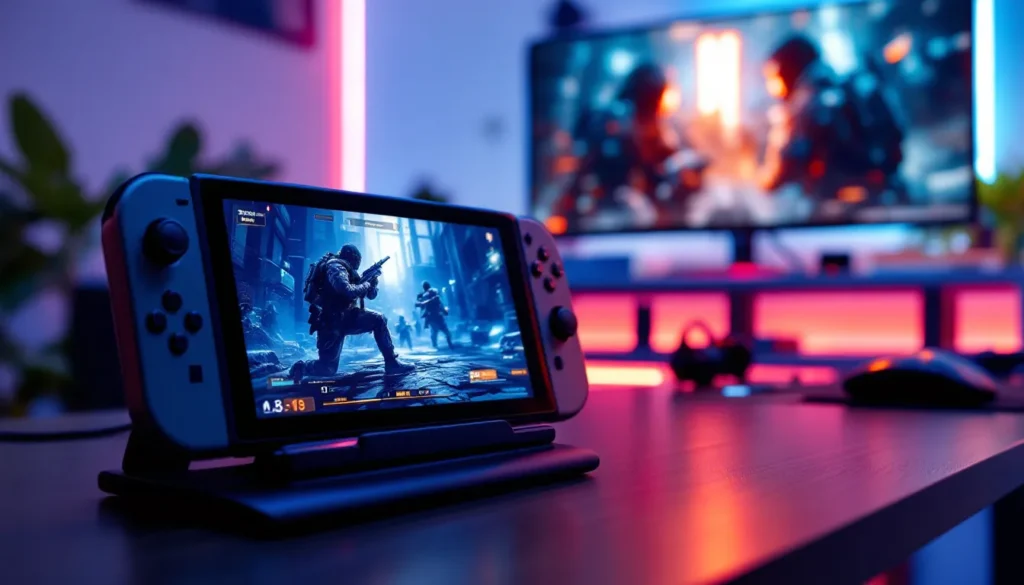
Let’s be direct: Call of Duty on Nintendo Switch is a compromise. You’re not getting the visual fidelity of a PS5 or high-end PC. Modern Warfare II on Switch runs at 720p handheld (1080p docked) and targets 30 frames per second. Some multiplayer maps drop below 30fps during intense firefights, especially in larger matches. For comparison, PS5 and Xbox Series X versions hit 120fps at 4K.
But, 30fps isn’t unplayable for Call of Duty. Many players find multiplayer acceptable at this refresh rate, though competitive players accustomed to 60+ fps will notice the difference immediately. Campaign mode generally holds frame rates more consistently since it’s not managing 12 players in dynamic environments simultaneously.
Texture quality is noticeably downgraded. Weapon models are simplified, environmental detail is reduced, and shadows are less detailed. The game still looks like Call of Duty, the UI, sound design, and overall polish remain intact, but it’s undeniably a smaller presentation. Loading times are longer on Switch, sometimes 30-45 seconds compared to 10-15 seconds on newer consoles.
Grieving about performance won’t change the situation, so the real question is: does it impact your experience? For campaign players and casual multiplayer fans, yes, it’s playable. For competitive ranked players, the lower frame rate puts you at a mechanical disadvantage against players on better hardware.
Control Schemes And Portability Benefits
Nintendo Switch’s control setup feels surprisingly natural for Call of Duty. The right stick handles camera sensitivity just like on Xbox, motion controls are optional but disabled by default (and most players leave them off). Pro Controller owners report the experience feels nearly identical to other console versions.
The real Nintendo advantage is portability. Play a multiplayer match in bed. Queue up a Warzone game during lunch. The flexibility is genuine and game-changing for busy gamers. The trade-off is that you know your opponent docked on a larger TV with better visibility has a slight edge.
Handheld mode is viable for multiplayer, though the smaller screen makes spotting distant enemies harder. Campaign and zombies feel great handheld, giving you single-player campaigns on the go, something PS5 and Xbox Series X simply cannot offer in the same way.
Multiplayer And Online Features on Nintendo
Cross-Platform Play And Community
Cross-platform multiplayer is enabled by default in Modern Warfare II on Switch. You can play with PlayStation, Xbox, and PC players. Your friend on PS5 and another on Switch can squad up, that’s the goal, and it mostly works. Matchmaking typically pairs you with other Switch players first (to level the playing field), but in larger regions or during peak hours, you’ll inevitably face players on stronger hardware.
The community aspect is where Nintendo Switch stands slightly isolated. Dedicated Switch lobbies are smaller than on PlayStation or Xbox, which means longer queue times during off-peak hours. Regional servers matter: if you’re in a less populated region, you might face longer waits for ranked matches or niche playlists.
Voice chat works via the headphone jack or Bluetooth headsets, though the Switch’s voice infrastructure is clunkier than on PlayStation or Xbox. You’ll need a compatible headset or USB adapter for reliable communication.
Battle Pass And Cosmetics Compatibility
Here’s the good news: your battle pass purchases sync across platforms (mostly). Buy tier skips on PlayStation, unlock them on Switch. Your cosmetics library carries over, including weapon blueprints, operator skins, and execution animations.
The catch: Warzone on Switch operates with a partially separated economy. Cosmetics you own do appear on your Warzone character, but the seasonal battle pass progression is independent. You’ll need to grind or purchase battle pass tiers separately for Warzone on Switch versus multiplayer, an annoying asymmetry that many players dislike.
Price parity exists. A 2400 CoD Point cosmetic costs the same on Switch as on Xbox or PC. Sales and seasonal bundles are synchronized across platforms, so you won’t miss out on limited-time content.
Storage, Downloads, and Technical Requirements
Modern Warfare II on Nintendo Switch requires approximately 90GB of storage, nearly the entire Switch’s internal capacity. Nintendo Switch OLED owners with 64GB internal storage will need a microSD card. A 256GB card is the practical minimum if you’re planning to store other games alongside Call of Duty.
Downloading is slow. Even on a fiber connection, a 50-90GB file takes several hours on Switch. Initial install times are substantially longer than on PS5 or Xbox Series X, which can complete downloads in 30-60 minutes. Plan ahead if you’re buying Call of Duty digitally.
Warzone requires separate installation (around 100GB total for the full package). If you want both multiplayer and Warzone, you’re looking at storage requirements that essentially demand an external microSD card.
Internet speed requirements are modest: 10Mbps download minimum, 1Mbps upload. But, a wired connection via USB adapter dramatically reduces lag compared to WiFi. If you’re playing multiplayer competitively, investing in a USB-to-Ethernet adapter (around $20-30) is strongly recommended. Wireless latency can swing between 40-80ms depending on distance and interference: wired typically sits at 20-40ms.
Switch Online subscription (NSO) is required for multiplayer, the standard $20/year or $50/3-year tier works fine. Expanding to NSO + Expansion Pack ($50/year) doesn’t provide Call of Duty benefits, so the basic tier is sufficient.
Comparison: Nintendo Versions vs. Other Platforms
Performance Differences And Trade-Offs
Let’s put numbers next to this. Modern Warfare II on Nintendo Switch runs at:
- Handheld: 720p resolution, 30fps target (dips to 25fps in intense scenarios)
- Docked: 1080p resolution, 30fps target (slightly more stable than handheld)
Compare that to:
- PS5/Xbox Series X: 4K resolution, up to 120fps (with performance mode options)
- PS4/Xbox One: 1080p-1440p, 60fps
- PC: Variable (1080p to 4K+), 60-240+ fps depending on hardware
The practical impact: on Switch, you’ll have longer TTK (time-to-kill) perception because the lower frame rate means delayed visual feedback. A headshot might register slightly delayed compared to 60fps, affecting competitive viability. For campaign and casual play, it’s negligible.
Loading times:
- Switch: 40-50 seconds average
- PS5/Xbox Series X: 10-15 seconds
- PS4/Xbox One: 20-30 seconds
And environmental rendering:
- Switch: Reduced draw distance, simpler shadow maps, lower-quality textures
- Last-gen consoles: Mid-range visuals, decent draw distance
- Next-gen/PC: Maximum visual fidelity, extended draw distance
Survival modes in campaigns load smaller encounter arenas on Switch to manage performance. Warzone matches on Switch have reduced player count potential (though 100-player matches are still standard).
Cost And Value Considerations
Call of Duty: Modern Warfare II costs $60 on Nintendo Switch, matching other platforms at launch. But, sales and price drops appear faster on Switch. Physical copies sometimes drop to $30-40 within 6-12 months, whereas digital prices remain sticky.
Warzone is free across all platforms, but the Switch version’s separated progression and reduced content updates make it feel “less complete” than playing on PlayStation or PC. Many players maintain Warzone solely on other platforms.
Costs add up if you need accessories: USB Ethernet adapter (~$20-30), Pro Controller (~$70 if you don’t have one), and a large microSD card (256GB ~$30-40). Total investment for a “competitive-ready” setup reaches $150-200, whereas someone who already owns a Switch might just need the $60 game.
Value proposition: Switch offers portability that no other platform matches. If you value playing Call of Duty anywhere, handheld on transit, on vacation, in different rooms, Switch’s premium is worth it even though the performance gap. If you’re prioritizing competitive multiplayer or visual quality, PlayStation or PC gaming offers superior experiences.
Tips for Optimizing Your Nintendo Call of Duty Experience
Controller Setup And Sensitivity Settings
Start with in-game sensitivity at 7-9 (default is typically 5-6). Higher sensitivity helps with quick camera movement in close quarters, but requires practice. Lower sensitivity (4-6) aids long-range aiming and is more forgiving for casual play. Most competitive players settle between 7-10 depending on playstyle.
ADS (aim down sights) sensitivity should be 0.70-0.85 times your base sensitivity. This prevents over-rotating when scoped and improves precision. Turn on aim assist (enabled by default on console), it’s not cheating, it’s calibration for the reduced frame rate.
Motion aiming is available but adds complexity. For most players, traditional stick aiming with generous aim assist is better. If you enable motion, pair it with lower base sensitivity (2-3) so you’re making small adjustments rather than large sweeps.
Button layout is crucial. Default mapping puts ADS on LT (left trigger), keep it. Jump mapped to RB (right bumper) is standard and reduces thumb strain since your thumb doesn’t have to leave the right stick. Slide/tactical stance on LB (left bumper) is solid: you’ll use it constantly.
Take 10-15 minutes in a custom game to adjust sensitivities and feel comfortable before jumping into multiplayer. Changing mid-session breaks muscle memory.
Network Optimization And Connection Stability
Wire your Switch if possible. Using a USB-to-Ethernet adapter (Nintendo-branded or third-party USB 3.0 models work) reduces latency by 20-30ms compared to WiFi. For multiplayer, this matters. If you can’t wire it, move your Switch closer to your router and minimize interference (microwaves, cordless phones, other 2.4GHz devices).
Close background applications. Don’t stream YouTube or download games while playing. Every bandwidth consumer increases your latency and packet loss risk.
Check your NAT type in Switch settings: ideally Type A or B. Type D and higher may cause connection issues. If you’re experiencing frequent lag, contact your internet provider or adjust router settings. Advanced players often reference competitive setup guides for precise network optimization.
Matchmake during regional peak hours. Queue up between 6-11 PM in your timezone when server populations are highest. You’ll face better connection quality and faster queue times. Off-peak matchmaking can pair you with distant players, increasing latency and creating inconsistent gameplay.
Reset your connection periodically. Exit the game, power off your Switch entirely (not just sleep mode) for 30 seconds, then restart. This clears networking buffers and often resolves connection drift in long sessions.
Monitor your ping in-game (enable in settings). Anything under 100ms is playable: under 60ms is ideal. If you’re consistently seeing 120ms+, your setup needs adjustment or your ISP is throttling.
Future of Call of Duty on Nintendo Platforms
The trajectory is cautiously optimistic. Activision’s 2024-2025 pattern shows continued Nintendo Switch releases, though not day-one alongside other platforms. Black Ops 6 remains absent from Switch as of March 2026, but industry observers predict it’ll eventually arrive, likely 6-12 months post-console launch. The pattern suggests Activision uses Switch ports to extend a game’s commercial lifecycle, squeezing additional revenue from the handheld market.
Nintendo Switch 2 is the wildcard. Rumors of improved hardware (unofficially targeting performance parity with PS4/Xbox One) could fundamentally change Call of Duty’s Nintendo presence. If Switch 2 can reliably run modern Call of Duty at 60fps docked, the franchise’s relationship with Nintendo transforms overnight. Ports become more competitive, launch timing accelerates, and the platform becomes genuinely viable for competitive play.
Until then, expect incremental improvements: better optimization of existing ports, more cosmetics parity across platforms, and possibly separated Warzone progression finally unifying with multiplayer. The franchise won’t abandon Nintendo, the handheld market’s profitability is too attractive, but it won’t get preferential treatment over PlayStation or Xbox either.
One wildcard: if Nintendo Life community and esports circles push harder for Call of Duty investment, publisher priorities shift. Audience demand has historically influenced porting decisions. A thriving competitive Switch community could justify higher-priority treatment.
Conclusion
Call of Duty on Nintendo Switch is no longer a fantasy, it’s real, playable, and genuinely enjoyable for specific use cases. If you value campaign experiences and casual multiplayer with the flexibility to play handheld, Modern Warfare II on Switch delivers. Performance compromises are real and undeniable, but they don’t eliminate the experience entirely.
The platform isn’t for competitive ranking grinders or visual fidelity enthusiasts. You won’t match 120fps PS5 players in a 1v1, and you won’t experience the game as Activision originally intended. But for the gamer who wants to play Call of Duty in bed, on a flight, or during downtime without maintaining a second console, Nintendo Switch opens doors that no other platform can.
As hardware improves and Activision continues refining Switch optimization, the experience will only get better. Check back in 2027 when more recent titles potentially arrive, or when Switch 2 officially launches. Until then, jumping into Modern Warfare II or Black Ops Cold War on Switch is a legitimate choice, just manage expectations and adjust your competitive ambitions accordingly.