Table of Contents
ToggleCall of Duty’s logo isn’t just a slapped-together graphic, it’s the visual anchor of one of gaming‘s biggest franchises. Since 2003, the series has shipped nearly 30 titles across multiple sub-franchises, and the logo has evolved right alongside them. Each iteration tells a story about where the franchise was heading, what design trends dominated the industry, and how Activision wanted players to perceive their flagship shooter. Whether you remember the bold, all-caps Original Series branding or you’re familiar with the sleek Modern Warfare variants, understanding these visual shifts reveals a lot about how Call of Duty has stayed relevant for over two decades. This guide walks through every major logo transformation, the reasoning behind each design choice, and how these symbols became instantly recognizable across esports, merchandise, and gaming culture.
Key Takeaways
- Call of Duty logos have evolved strategically since 2003, from bold yellow-and-gray military branding to the sleek, minimalist design of Modern Warfare, reflecting shifts in design trends and market positioning.
- The Modern Warfare logo redesign prioritized scalability and digital optimization, ensuring the wordmark remains legible across platforms from 4K monitors to tiny app icons and social media avatars.
- Black Ops sub-franchise differentiation through distinctive black-and-red branding created visual hierarchy within Call of Duty while maintaining core franchise recognition and esports appeal.
- Call of Duty logos outpace competitors like Battlefield and Halo in cultural impact due to willingness to evolve while maintaining recognizability, giving the franchise a premium visual authority in competitive markets.
- Professional esports teams and merchandise ecosystems depend on Call of Duty’s stable yet flexible branding to build team identity, with logos serving as essential assets for CDL franchises and community recognition.
- Seasonal logo variations and color psychology—from yellow conveying tactical professionalism to red triggering competitive intensity—drive player engagement, merchandise sales, and cultural embedding across streaming and community platforms.
The Origins of Call of Duty Branding
The First Generation Logo Design
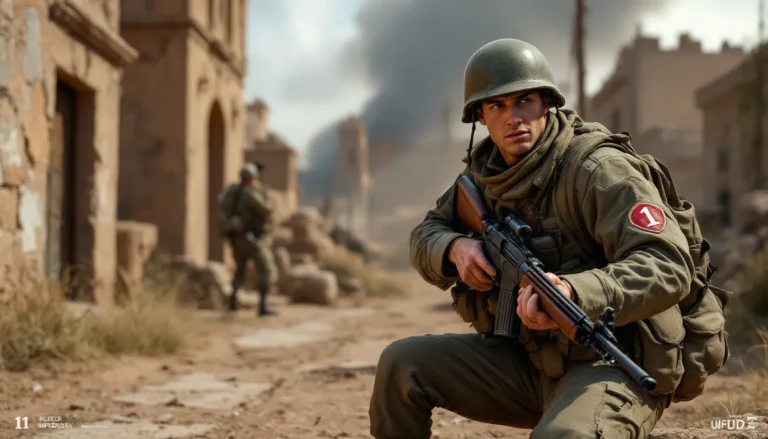
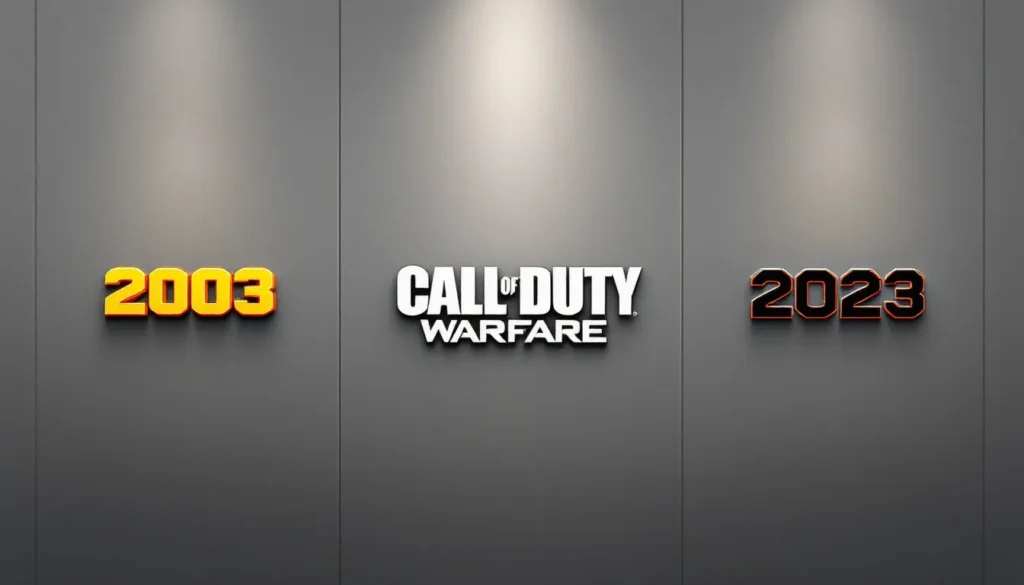
The original Call of Duty (2003) launched with a straightforward, military-inspired logo that screamed late-2000s gaming aesthetic. The wordmark used a bold, angular sans-serif typeface in yellow and gray tones against a darker backdrop. This wasn’t accidental, the aggressive letterforms evoked machine gun fire and tactical precision, which perfectly matched the game’s World War II setting. The logo’s simplicity made it memorable on magazine covers, box art, and early web banners when resolution limitations actually mattered.
What made this logo stick wasn’t complexity: it was contrast and readability. The yellow-on-dark color scheme popped on shelves, and the military-grade typography reflected the game’s authentic tone. There were no gradients or excessive effects, just clean lines and solid fills. Players instantly knew what they were looking at, and retailers could print it at any size without losing legibility.
Early Franchise Identity & Market Position
By the time Call of Duty 2 and 3 hit shelves, the logo had minor refinements but kept its core identity. The franchise was positioning itself as the thinking person’s shooter, tactical, grounded, and respectful of military aesthetics. The branding didn’t try to be flashy: it was purposeful. That restraint actually helped differentiate Call of Duty from competitors who were chasing neon colors and edgy extremism.
The logo appeared consistently across merchandise, promotional materials, and gaming covers, building brand recognition that would pay dividends for years. Casual gamers could spot that yellow-and-gray wordmark from across a room. Esports teams would later adopt similar color schemes, directly inspired by the early logo’s authority. The visual language established in 2003-2005 created the foundation for everything that came next.
Modern Warfare Era Logo Transformation
Shift to Sleeker, Contemporary Design
When Infinity Ward rebooted the franchise with Modern Warfare (2019), the logo got a major facelift. Out went the chunky, blocky typography of the original trilogy. In came a refined, lowercase wordmark that looked less like a tank manual and more like a premium lifestyle brand. The modern iteration dropped the yellow entirely, leaning into stark white, black, and cold metallics that screamed cutting-edge military hardware.
This wasn’t just cosmetic. The 2019 reboot signaled a shift in tone, less “gritty historical warfare” and more “near-future tactical operations.” The logo reflected that change through minimalism and geometric precision. Letter spacing opened up, giving the design breathing room. Serifs disappeared. The entire aesthetic felt contemporary without dating itself as obviously as the original yellow-and-gray would have by 2019.
The Modern Warfare logo also performed better at small scales. Optimization for mobile devices and social media icons meant the design needed to work at thumbnail size, in app icons, and on tiny esports stream overlays. The cleaner, more geometric approach handled these constraints brilliantly.
Visual Impact on Player Recognition
That reboot logo became the face of a $200+ million franchise overhaul. Players associate the clean, angular wordmark with the gameplay overhaul that came with it, a return to grounded, boots-on-the-ground combat after years of wall-running jetpack nonsense. The logo’s visual directness mirrored the game design philosophy: stripped-back, focused, no unnecessary flourish.
The recognition was immediate. Within weeks, the logo showed up in esports broadcasts, streamer overlays, and community artwork. Activision’s decision to make the logo more elegant and less “military hardware catalog” opened doors for sophisticated partnerships with brands and sponsorships that wouldn’t have touched the 2003 design. Professional teams started incorporating elements of the Modern Warfare logo into their branding because it had cultural cachet beyond just “first-person shooter.” Competitive players even made the logo iconic through tournament play, the visual history of Call of Duty Championships shifted the moment this new branding landed.
Warzone & Seasonal Logo Variations
Limited-Time Event Branding
Warzone’s free-to-play launch introduced a complexity into Call of Duty branding that previous standalone titles never had to manage. Seasonal updates meant new logos, new visual themes, and new branded assets roughly every 6-8 weeks. Each season came with its own visual identity, Season 1 had one aesthetic, Season 2 Reloaded something entirely different, and by Season 5 (Reboot), players had seen five major branding iterations.
These weren’t always full logo overhauls. Sometimes it was a seasonal variant: the core Call of Duty wordmark with thematic overlays, color shifts, or decorative elements. A zombie-themed season would add decay or red accents. A futuristic season brought neon glows. The base logo remained recognizable, but the temporary variants kept things fresh and gave players visual anchors for different content drops.
This approach created a merchandising nightmare but an engagement goldmine. Limited-time logos meant limited-time cosmetics tied to those visuals. Players who wanted the Season 3 branded operator skin needed to grab it before the logo (and the theming) rotated out. The visual novelty kept the game feeling fresh on a marketing level, even if core gameplay didn’t change dramatically.
Cross-Game Logo Consistency Challenges
Here’s where things got messy: Call of Duty was now three separate products (Modern Warfare, Warzone, Cold War) with loosely connected branding. The Modern Warfare logo didn’t perfectly match Cold War’s aesthetic, and Warzone existed somewhere in the middle visually. Activision had to maintain consistency while acknowledging that Cold War had a different tone, darker, more retro-cold-war vibes, than the sleek 2019 Modern Warfare.
Cold War’s logo pushed warmer reds and deep blacks, reflecting its 1980s setting and campaign tone. This created visual fragmentation across the franchise. Esports broadcasters and content creators had to manage multiple logos depending on which game mode they were covering. Social media posts about “Call of Duty” became ambiguous, was it the Modern Warfare version, Cold War version, or Warzone-specific branding?
The confusion persisted until the unified “Call of Duty” rebrand with Modern Warfare II (2022) and Warzone 2.0, which consolidated the logo variants and pushed toward a single, recognizable wordmark across all platforms and game modes. That consolidation reflected lessons learned from five years of fragmented branding.
Call of Duty Black Ops Iconic Branding
Distinctive Black & Red Logo Elements
Black Ops has always been Call of Duty’s edgier sub-franchise, and the logo reflects that attitude. The Black Ops wordmark ditches the clean minimalism of Modern Warfare in favor of something grittier, angular letterforms with a heavy, almost stencil-like quality. The iconic black-and-red color scheme isn’t just aesthetic preference: it’s brand differentiation. When players see that red-on-black combo, they instantly know: this is Black Ops, not standard Modern Warfare.
The logo design itself uses more geometric aggression than the main franchise. Corners are sharper. Spacing is tighter. There’s a militaristic, almost propaganda-poster feel to Black Ops branding. It signals that this sub-franchise has a different tone, darker campaigns, edgier competitive scene, and a willingness to bend Call of Duty’s typical design rules.
That black-and-red combination became so iconic that professional esports teams immediately adopted it. You’ll see Black Ops-themed team skins and branding because the visual language is inherently dramatic and competitive-ready. The color contrast works beautifully in broadcast environments, making the branding pop on-screen during tournaments and streams.
Subline Titles & Visual Differentiation
Black Ops spawned multiple subtitled entries, Black Ops II, Black Ops III, Black Ops Cold War, and each had unique logo treatments. Black Ops II added a colder blue-gray element to the black-and-red core, suggesting technological advancement. Black Ops III went even further, incorporating sci-fi aesthetics with a more digital, futuristic wordmark. Cold War brought the 1980s nostalgia into play with retro typography elements.
These variations meant players could distinguish between entries at a glance. The Black Ops IV logo looked different enough from Black Ops Cold War that confusion was minimal. The sub-branding created hierarchy without losing the core identity. Teams and content creators could use the Black Ops branding umbrella while still signaling which specific game they were promoting.
This strategy proved so successful that Activision doubled down on visual differentiation. Each Black Ops title received its own logo treatment, making them feel like distinct products while maintaining franchise cohesion. The black-and-red core remained consistent, but typography, materials (metallic vs. matte), and secondary colors shifted to reflect each game’s unique tone.
Logo Design Elements & Symbolism
Color Psychology in Gaming Branding
Call of Duty’s evolution through color choices tells a story about market positioning and audience perception. The original yellow-and-gray said “tactical, grounded, professional.” Modern Warfare’s shift to white-and-black meant “contemporary, clean, premium.” Black Ops’ red-and-black communicates “aggressive, dangerous, edgy.”
Color in gaming branding isn’t random, it’s psychological warfare on your eyeballs. Red triggers urgency and intensity, which is exactly what competitive players want to feel. Black conveys authority and mystery. White suggests innovation and cutting-edge technology. By layering these choices across different sub-franchises, Activision created visual distinctions that affect how players perceive each game’s tone and competitive viability.
Warzone’s branding actually pulled from both Modern Warfare and Black Ops palettes depending on the season, showing that color flexibility could work without breaking brand recognition. The core wordmark remained consistent enough that players knew they were looking at Call of Duty content, but the color treatments provided seasonal variety. This approach solved the merchandising problem, limited-time colored variants felt exclusive and drove cosmetic sales.
Typography & Readability Across Platforms
The evolution from blocky, serif-heavy 2003 letterforms to the minimalist, geometric 2019 design reflects how logo design has had to adapt to digital-first distribution. Modern logo design lives in three dimensions: physical packaging, digital displays, and microscopic app icons. The original Call of Duty logo worked fine on a DVD case but would’ve been illegible at 32 pixels on a mobile device.
Modern Warfare’s logo solved this problem through open letter spacing and geometric simplicity. At any scale, from a 4K monitor to a tiny Twitter avatar, the wordmark remains readable. Bold weight consistency means no stroke gets lost in compression or anti-aliasing artifacts. The type choice itself (a clean, contemporary sans-serif) has no serifs that might break apart at small sizes or create optical issues on low-resolution screens.
This design evolution reflects the shift from console-exclusive branding to cross-platform necessity. Call of Duty appears on PC, PlayStation, Xbox, mobile, and streaming platforms. The logo needs to work everywhere simultaneously. Modern Warzone’s logo accommodates all these constraints while maintaining visual impact, no small feat in an era when logos need to look good from 4K down to favicon size. Professional typographic decisions made the difference between a logo that aged poorly and one that’s stood the test of multiple franchise entries.
How Call of Duty Logos Compare to Competitors
Battlefield & Halo Logo Positioning
Battlefield’s branding strategy differs significantly from Call of Duty’s evolution. Battlefield stuck with a more consistent, angular logo treatment, the word “Battlefield” in sharp, militaristic letterforms with minimal variation across entries. The red color remained constant, creating instant recognition but less differentiation between titles. Players know Battlefield when they see it, but the logo doesn’t tell you whether it’s Battlefield 1, V, or 2042.
Halo, conversely, went the opposite direction with its Spartan-focused branding. The Halo wordmark is iconic and consistent, but the visual identity leans more sci-fi and less grounded-military than either Call of Duty or Battlefield. Halo’s branding emphasizes the futuristic, almost holy symbolism of the ring-world, which positions it as more fantastical than Call of Duty’s tactical realism.
Call of Duty’s advantage lies in its willingness to evolve the logo while maintaining core recognizability. Modern Warfare’s reboot logo showed sophistication and contemporary design sensibility that neither Battlefield nor Halo could match with their more static approaches. This flexibility also allows Call of Duty to chase trends without losing brand identity, a critical advantage in a rapidly evolving esports and streaming landscape.
Market Differentiation Through Visual Branding
The competitive FPS market is crowded. Overwatch, Valorant, CS2, and a dozen other titles fight for mindshare. Call of Duty’s logo design has been instrumental in maintaining shelf space, both literal and metaphorical. When a player sees the Modern Warfare logo in a store, on Twitch, or in an esports broadcast, there’s zero ambiguity about what they’re looking at.
Battlefield’s stagnant branding allowed Call of Duty’s more aggressive logo evolution to outpace it visually. When Call of Duty rebranded in 2019, it felt fresh and contemporary. Battlefield looked dated by comparison, even though Battlefield V was technically newer. The logo’s visual authority matters in an industry where attention spans measure in milliseconds.
Activision understood that a premium FPS needs premium branding. The Modern Warfare logo design actually achieved what luxury brands spend millions on: instant recognition combined with aspirational quality perception. Players associate that clean, geometric wordmark with $200+ AAA production value. Competitors with more generic branding struggle to convey the same sense of quality and professionalism, their logos just scream “shooter game,” while Call of Duty’s logo says “the industry standard.”
Esports organizations particularly value the Call of Duty branding versatility. The logo works well alongside sponsorship logos, team colors, and broadcast graphics because its clean design doesn’t compete for visual attention. The Loadout’s coverage of competitive FPS branding highlights how logo design influences esports team aesthetics and sponsorship appeal, Call of Duty’s visual sophistication consistently ranks among the most versatile for competitive integration.
The Impact of Logos on Gaming Culture & Esports
Esports Team Adoption & Customization
Call of Duty esports wouldn’t exist in its current form without recognizable, adaptable branding. Professional teams adopted the black-and-red Black Ops aesthetic because it’s visually powerful and easy to customize. Teams like Dallas Empire and New York Subliners built their entire visual identity around Call of Duty’s color palettes and logo treatments, adding team colors and custom wordmarks while maintaining the franchise’s visual language.
The logo’s authority meant that when Activision introduced the CDL (Call of Duty League) franchising system, teams could safely invest in custom branding without worrying that next year’s logo redesign would obsolete their jersey designs. The Modern Warfare era branding proved stable enough for professional organizations to build merchandise ecosystems around it. Compare this to other shooters where franchise branding changes so frequently that team merchandise becomes dated within a season.
Players recognize CDL teams as much by their color schemes and logo treatments as by player names. When you see the Seattle Surge’s teal and black, or the Los Angeles Thieves’ purple, those colors directly reference Call of Duty’s branding flexibility. The logo’s professional quality made CDL teams look legitimate in a way that franchise teams in other shooters struggled to achieve.
Community Recognition & Merchandise Appeal
Merchandise sales follow brand recognition like heat follows fire. The iconic black-and-red Black Ops aesthetic became so embedded in gaming culture that apparel companies started producing unofficial Call of Duty merchandise, hoodies, t-shirts, hats, using variations of the logo without always licensing rights (which is its own legal drama). The point: the logo was so culturally significant that players wanted to wear it.
Modern Warfare’s rebranding actually improved merchandise appeal. The clean, contemporary logo looked good on clothing, whereas the original 2003 design looked dated on anything printed after 2010. Players who wanted to rep Call of Duty didn’t have to worry about looking like they were promoting a game from the Bush administration. The visual sophistication of modern logos made it socially acceptable to wear Call of Duty branded gear as an adult.
Streaming culture amplified this effect. Content creators with millions of followers wore Call of Duty branded apparel on-stream, which drove merchandise demand. The logo appearing in a 12-hour Twitch broadcast to 100k viewers provides more marketing value than traditional advertising. IGN’s streaming and esports coverage documents how in-stream brand visibility drives merchandise sales, Call of Duty’s recognizable logos are featured prominently in streams because the branding is visually compatible with broadcast environments.
Community artwork also spread the logo’s influence. Fan artists created variations, parodies, and remixes of the logos, which virally distributed the imagery across social platforms. A single reddit post with a high-effort logo redesign could reach hundreds of thousands of gamers, reinforcing brand recognition. The logo became so culturally embedded that gaming communities made it part of their identity. In forums, subreddits, and Discord servers, the Call of Duty logo became shorthand for excellence in the FPS space. That cultural weight required constant visual evolution, stagnant branding would’ve diluted the prestige the logo commands. Dexerto’s esports reporting frequently highlights how Call of Duty’s branding influences team aesthetics and community identity, demonstrating the logo’s cultural reach beyond the game itself.
The reach extends to the Call of Duty Cover Art and broader franchise design. Every piece of official artwork incorporates these logos, creating cohesion across packaging, digital distribution, and promotional materials. The logo’s presence on every marketing asset reinforces its centrality to the franchise’s identity. Players can’t avoid it, which simultaneously builds recognition and creates opportunities for merchandise tie-ins. Strategic logo placement, visible but not obtrusive, allows the branding to work quietly in the background while dominating category awareness. That balance between omnipresence and restraint defines modern Call of Duty branding at the highest level.
Conclusion
Call of Duty’s logo evolution mirrors the franchise’s own journey from early-2000s military sim to contemporary esports juggernaut. Each redesign reflected market positioning, audience perception, and design trends, the yellow-and-gray of 2003 communicated tactical authenticity, Modern Warfare’s clean minimalism signaled premium contemporary design, and Black Ops’ aggressive red-and-black branding captured the franchise’s competitive edge.
The logo isn’t just cosmetic window dressing. It’s how players recognize their game across a dozen platforms. It’s how esports teams build their identity. It’s how merchandisers know what will sell. The visual sophistication of modern Call of Duty branding, particularly the post-2019 iterations, has elevated the franchise’s cultural standing beyond “shooter game” into the realm of aspirational gaming brands.
As the franchise moves forward with new entries and seasonal updates, expect the logo to continue evolving. The baseline design language established by Modern Warfare (clean, geometric, scalable) provides enough flexibility to accommodate new themes, seasonal variants, and sub-franchise differentiation without losing core recognition. Whether that’s through color variations, typography refinements, or temporary event branding, the logo will remain Call of Duty’s visual anchor. For a franchise that’s shipped nearly 30 titles across two decades, that consistency, paired with willingness to evolve, is what keeps players instantly recognizing their favorite shooter, whether they’re booting up on PlayStation, PC, or Mobile, dropping into the latest seasonal content, or grinding competitive matches. The logo’s legacy is secure, and its future remains tied to Call of Duty’s continued dominance in the FPS landscape. Players invested decades into this franchise partly because the branding, starting with that unmistakable logo, made them feel like they were part of something bigger than just another shooter.