Table of Contents
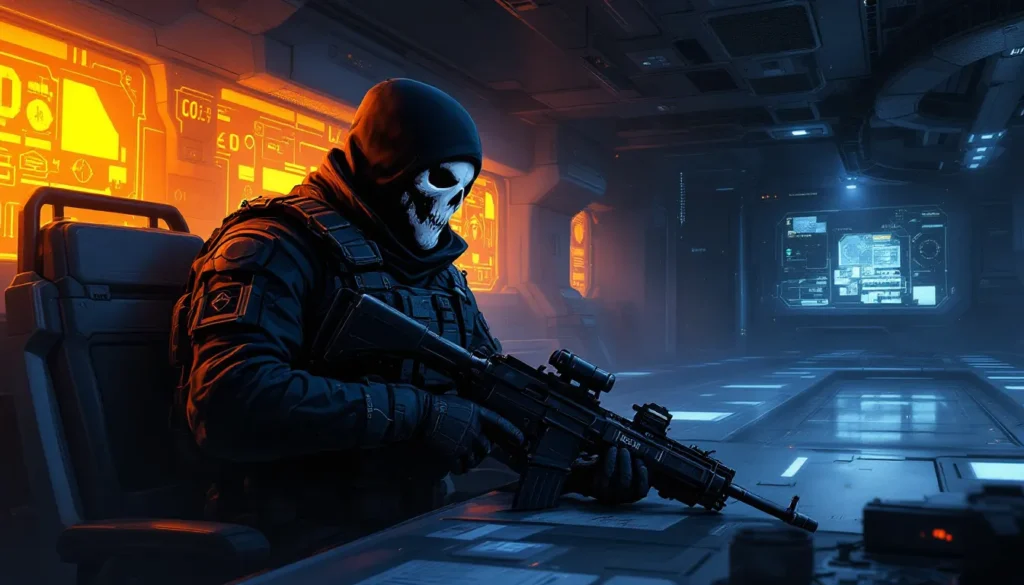
ToggleGhost stands as one of gaming’s most compelling antiheroes, a character whose mere silhouette, skull mask, tactical gear, relentless drive, has become synonymous with modern Call of Duty. Whether you first encountered him in the 2009 Modern Warfare 2 campaign or rediscovered him in the 2019 reboot, Ghost represents more than just another soldier. He’s the embodiment of trauma, loyalty, and the cost of survival in a world where moral lines blur. The Call of Duty Ghost character transcends typical military gaming tropes, offering players a protagonist wrapped in mystery and defined by his unflinching pursuit of justice. Understanding Ghost means understanding why millions of players have connected with this character across multiple franchises and generations, from his devastating final moments in Modern Warfare 2 to his resurrection and renewed purpose in the modern era.
Key Takeaways
- Ghost’s transformation from SAS soldier Simon Riley into an iconic antiheroine was forged through trauma and betrayal, making the Call of Duty Ghost character a morally complex protagonist rather than a traditional military hero.
- Ghost’s shocking death in Modern Warfare 2 cemented his legacy not through triumphant heroics but through tactical efficiency and sacrifice, while his 2019 resurrection demonstrated player demand for continued narrative depth.
- Mastering Ghost in multiplayer requires prioritizing information advantages and positioning over raw firepower, using suppressed weapons, and rotating positions every 60-90 seconds to maintain unpredictability and control map space.
- Ghost’s appeal transcends gameplay mechanics—his quiet intensity, measured dialogue, and vulnerability beneath the skull mask resonated with mainstream audiences and elevated Call of Duty character writing beyond typical military tropes.
- Ghost’s cosmetic popularity and competitive viability stem from his consistent tactical identity across campaign, multiplayer, and Warzone modes, where radar disruption abilities align perfectly with his covert operational heritage.
Who Is Ghost? Understanding The Character Behind The Mask
Ghost’s Origins And Background Story
Simon Riley, the man beneath the iconic skull mask, didn’t start as a legend. He was an SAS soldier shaped by the harsh realities of covert operations. Before becoming the Ghost players know today, Riley was a disciplined operative following orders, but that all changed when his unit was betrayed by commanding officer General Makarov during a nuclear fallout scenario. The incident that forged Ghost’s identity involved watching his father’s private military company, Shadow Company, collapse under corruption and violence. This wasn’t just a professional setback, it was personal devastation that reshaped his entire worldview.
The psychological weight of these events transformed Riley. He didn’t just survive: he reinvented himself with the skull mask and Ghost persona, becoming something more dangerous and focused. In Call of Duty Modern Warfare 2, players witness him at this critical inflection point, operating from a place of vengeance wrapped in professionalism. The mask represents both anonymity and identity, a way to distance himself from the person he was while embodying the soldier he’d become. Unlike traditional protagonists who operate within clear moral frameworks, Ghost operates in the shadows where rules are less defined and stakes are existentially higher.
The Modern Warfare Reboot And Character Evolution
When the 2019 Modern Warfare reboot arrived, Ghost experienced a resurrection of sorts. The character returned with more depth and complexity than his original 2009 iteration. This wasn’t merely fan service: it was a deliberate reimagining that acknowledged Ghost’s legacy while pushing his character into new territory. The reboot positioned him as a seasoned operator hardened by countless operations, yet still driven by the same core trauma that first motivated him.
In the 2019 game, Ghost serves a different function, he’s an experienced mentor figure to newer operators, particularly Kyle “Gaz” Garrick. This evolution showed growth without softening the character. The developers understood that Ghost’s appeal wasn’t about redemption or heroic sacrifice in the traditional sense. Instead, they leaned into his methodical approach to mission completion and the quiet intensity beneath his composed exterior. His dialogue exchanges reveal someone who’s processed his trauma through action rather than reflection. The Modern Warfare reboot allowed Ghost to mentor the next generation of operators while maintaining the edge that made him unforgettable in Modern Warfare 2. This character evolution demonstrates how strategic games can deepen beloved characters without destroying what made them compelling in the first place.
Ghost’s Role In The Call Of Duty Campaign
Campaign Story And Mission Progression
Ghost’s campaign presence varies depending on which game you’re examining. In Modern Warfare 2, he begins as a high-ranking SAS operative under General Makarov’s command, though the player doesn’t realize the depth of betrayal unfolding around him until late in the narrative. The campaign gradually reveals that Ghost has been operating from a position of knowledge about shadows within his own chain of command. His missions involve securing nuclear materials and intercepting Makarov’s operations across various global hotspots.
The pacing of Ghost’s campaign arc is methodical. Players experience his tactical expertise firsthand during covert operations that showcase his ability to coordinate complex multi-stage missions. Unlike some Call of Duty protagonists who serve primarily as insertion points for the player, Ghost drives mission objectives with deliberate intent. His orders aren’t arbitrary, they reflect specific strategic goals that build toward the campaign’s climax. The call of duty modern warfare 2 campaign uses Ghost to represent the operational core of military excellence, grounding fantastical scenarios in tactically plausible approaches.
In the 2019 Modern Warfare reboot, Ghost’s role shifts toward mentorship and operational support. He orchestrates some of the most important missions from a strategic perspective, working alongside Gary Sanderson (Gaz) and other operators. His presence in these campaigns establishes him as someone who’s learned from past mistakes and now approaches missions with even greater care. The progression feels earned rather than forced, as players watch him guide others through scenarios that would have been handled differently in his younger years.
Key Moments That Define The Character
The most defining moment in Ghost’s entire narrative occurs at the conclusion of Call of Duty Modern Warfare 2. After accomplishing mission objectives and extracting with fellow operators, Ghost and his team face an ambush orchestrated by General Makarov. What unfolds is one of gaming’s most shocking character deaths, and it’s handled with almost brutal simplicity. Makarov shoots Ghost point-blank, douses him in gasoline, and watches him burn alongside his fallen comrade Roach. The scene lacks grandiose dialogue or heroic last words. Ghost simply accepts his fate with the professionalism that defined his entire character.
This moment resonates because it contradicts player expectations. Ghost isn’t given a triumphant farewell. He doesn’t get to confront his betrayer in a climactic showdown. Instead, he’s dispatched with the same tactical efficiency he applied to his operations. The scene reinforced that in Ghost’s world, loyalty and tactical excellence don’t guarantee survival. That moment also cemented Ghost’s legacy, players remembered not his victories but his defeat, the way his character arc concluded with loss and sacrifice.
The resurrection scene in the 2019 Modern Warfare reboot provides another defining moment, though of a different character. Seeing Ghost alive again (having somehow survived Modern Warfare 2, a detail never fully explained but widely accepted by the community) validates what players had always suspected, Ghost’s story wasn’t finished. His involvement in post-mission debriefs and strategic planning demonstrates that his character evolved beyond the soldier defined by vengeance. Call of Duty Villains like Makarov shaped Ghost’s trajectory, making those antagonistic forces essential to understanding his development.
Ghost’s Personality And Combat Style
Tactical Approach And Strategic Thinking
Ghost’s personality rarely explodes into dramatic displays. Instead, it manifests through measured professionalism and calculated decision-making. He operates from a framework of pragmatism, emotions are processed internally, judgments are made based on available intelligence, and actions follow logically from strategic assessment. This personality type attracts players who appreciate gameplay that rewards positioning, map awareness, and methodical approaches over twitch reflexes alone.
In terms of combat style, Ghost’s methodology prioritizes efficiency. He doesn’t engage in unnecessary firefights when flanking routes exist. He doesn’t waste ammunition on targets that can be neutralized through other means. This approach translates directly to how Ghost operators perform in multiplayer, they tend toward methodical plays, positioning advantages, and tactical patience. Players who choose Ghost as their operator often demonstrate deliberate movement patterns and map control strategies rather than aggressive rushing.
Ghost’s tactical mindset extends to weapon selection and loadout construction. He favors equipment that grants information advantages or enables precise engagement. Silencers, optics, and tactical gear dominate his preferred configurations rather than explosive equipment or high-risk setups. This personality consistency, from campaign narrative through multiplayer playstyle, creates a cohesive character that feels authentic across different game modes.
Memorable Quotes And Character Depth
Ghost doesn’t deliver lengthy monologues or philosophical observations. His dialogue tends toward the terse and mission-focused. One of his most memorable lines, “We’re not just soldiers, we’re ghosts”, encapsulates his entire worldview. The statement suggests existence outside conventional military structures, operating in spaces where standard rules don’t apply. This line appears simple on the surface but carries weight when considering Ghost’s actual operational reality.
Another defining moment comes from his interactions with Roach in Modern Warfare 2. When Roach is critically injured after a nuclear explosion, Ghost’s response combines military pragmatism with underlying loyalty. He doesn’t offer false reassurances or emotional platitudes. Instead, he acts, attempting to extract his teammate even though catastrophic circumstances. That action-focused response reveals depths beyond the stoic exterior. Ghost shows he values his operators through deeds rather than words.
In multiplayer interactions and operator voice lines, Ghost maintains character consistency. His lines often reference the mission, current objectives, or tactical observations rather than personal commentary. Lines like “Ghost is in position” or “Moving to the objective” demonstrate that even his multiplayer character stays focused on operational requirements. Occasionally, darker humor surfaces, acknowledging the weight of military service without surrendering professionalism. This tonal balance prevents Ghost from becoming a one-dimensional caricature while maintaining the intensity that defines him. Game8 provides tier lists and build guides where Ghost frequently ranks among the highest-rated operators, reflecting how his character resonates with competitive players seeking methodical, tactical gameplay.
Ghost In Multiplayer And Warzone
Playing As Ghost: Operator Abilities And Loadout
When players select Ghost as their multiplayer operator, they’re choosing a character class with specific strategic advantages. In the 2019 Modern Warfare and subsequent Warzone iterations, Ghost functions as a stealth-focused operator. His most notable ability involves equipment that disrupts enemy radar and thermal imaging, a tactical advantage that aligns perfectly with his covert operational heritage. This isn’t flashy or explosive: it’s methodical denial of enemy information advantages.
Ghost’s preferred loadout emphasizes consistency with his tactical personality. Primary weapon selections typically include assault rifles with minimal flash (suppressed muzzles, low-profile scopes) or tactical rifles that reward positioning over aggression. Secondary weapons favor pistols that enable quick weapon switches in close quarters without sacrificing stealth. Equipment selections lean toward lethal and tactical grenades that minimize detection, flash bangs, stun grenades, or claymores that work silently.
For beginners adapting to Ghost’s playstyle, the key is embracing patience. Ghost excels in mid-range engagements where positioning matters more than fire rate. Players should:
- Control high-ground positions on maps
- Use cover effectively rather than pushing exposed lanes
- Leverage audio cues since Ghost disrupts enemy radar
- Engage from unexpected angles where opponents aren’t anticipating fire
Competitive players often customize Ghost’s setup based on specific map layouts. On dense, close-quarters maps, faster-handling weapon configurations work better. On open maps, longer-range setups enable Ghost to maximize range advantages where his tactical approach creates space. The flexibility within Ghost’s framework, maintaining his core identity while adapting to circumstances, defines what makes him competitively viable across diverse scenarios.
Cosmetic Variants And Customization Options
Ghost’s cosmetic customization options in modern Call of Duty titles extend his character beyond the base skull-masked operator. These variants maintain his fundamental identity while adding visual distinction. Classic options like the “Roach” skin reference his partnership with Roach from Modern Warfare 2, creating emotional resonance for veteran players. The Hooded variant presents Ghost in tactical hood instead of full face coverage, while the Dark Whispers skin introduces a darker aesthetic that emphasizes his shadow-operative nature.
Season-specific cosmetics occasionally release Ghost variants that experiment with thematic elements. Some introduce tactical gear variations reflecting different operational theaters, while others lean into supernatural or science fiction aesthetics that appeal to players seeking visual novelty. Call of Duty Monster Skin options exist within the broader cosmetic ecosystem, though Ghost’s core variants typically maintain tactical realism rather than fantastical designs.
Community preferences about Ghost cosmetics tend toward skins that enhance visual clarity and maintain his recognizable silhouette. The skull mask remains Ghost’s defining visual element across most variants, ensuring players instantly recognize which operator they’re facing in multiplayer matches. Weapon blueprint customization allows Ghost players to coordinate their loadout’s visual appearance with their operator skin, creating cohesive tactical aesthetics. These cosmetic systems reward player investment while maintaining competitive fairness, cosmetics are entirely visual, offering no mechanical advantages.
Ghost’s Impact On Call Of Duty Franchise
Legacy And Fan Reception
Ghost’s impact on the Call of Duty franchise extends far beyond individual game releases. The character achieved what few video game protagonists manage, he became recognizable to mainstream audiences, not just dedicated gamers. His skull mask transcended gaming, appearing in memes, merchandise, and cultural discussions about military gaming narratives. This recognition stems from the character’s authentic portrayal combined with genuine vulnerability beneath the tactical exterior.
Fan reception intensified after Ghost’s shocking death in Modern Warfare 2. Rather than diminishing his legacy, the character’s demise cemented his mythic status. Players weren’t upset because Ghost was poorly written: they were devastated because they’d genuinely cared about a character who showed actual depth. The resurrection in 2019’s Modern Warfare demonstrated that developers recognized Ghost’s unfinished narrative, players wanted more of his story, and that demand was validated through his return.
Community discussions about Ghost often revolve around his moral complexity. Unlike clear-cut heroes who operate within rigid ethical frameworks, Ghost occupies gray areas. He pursues vengeance through military operations, blurs the line between tactical necessity and personal motivation, and operates outside conventional authority structures. This moral ambiguity rather than being a weakness actually strengthened his appeal. Players appreciated that Ghost wasn’t a propaganda tool for military glorification: he was a damaged person trying to create meaning from his trauma.
The character’s influence extended to merchandise, with Ghost becoming one of the most popular operator skins in Call of Duty cosmetic markets. Players gravitated toward Ghost cosmetics across both casual and competitive contexts, indicating that his appeal transcends playstyle preferences. Whether someone mains Ghost for his tactical advantages or selects him simply because they appreciate the character, his cosmetic popularity reflects genuine emotional investment from the playerbase.
Comparison With Other Iconic Call Of Duty Characters
Ghost occupies a unique position within Call of Duty’s character roster. Unlike Captain Price, who represents institutional military authority and structured command, Ghost operates outside those systems. Price delegates from strategic positions: Ghost executes from tactical positions. This distinction creates different emotional relationships, Price inspires confidence in organizational competence, while Ghost evokes darker recognition that sometimes the system itself is the enemy.
Comparing Ghost to characters like Alex Mason (Black Ops protagonist) reveals different narrative approaches to trauma. Mason is explicitly defined by psychological manipulation and brainwashing, with his entire story revolving around untangling what’s real in his own memories. Ghost’s trauma manifests differently, his identity became stronger through adversity rather than fractured. Where Mason rebuilds identity after psychological destruction, Ghost weaponized his identity as a coping mechanism. Both characters emerged from trauma fundamentally altered, but through distinctly different psychological trajectories.
The 3D call of duty modern warfare character models across iterations showcase Ghost’s visual consistency even as narrative context evolved. From Modern Warfare 2’s original polygon-based representation through current photogrammetry-based character models, Ghost’s core design remained recognizable. This visual consistency across technological generations reinforces his iconic status, players instantly recognize Ghost regardless of which game they’re playing. Other characters received complete visual overhauls across platforms and generations, but Ghost maintained visual coherence while still evolving.
When examined against the broader Call of Duty cast, Ghost stands out for existing partially outside the traditional military hierarchy. He answers to Price and other commanding officers, but his narrative carries undertones of someone who’d function equally well operating independently. Characters like Soap MacTavish demonstrate clear hierarchical loyalty and respect for authority. Ghost maintains professional relationships while suggesting he’d operate effectively outside those structures entirely. That distinction made Ghost the character players would follow into ambiguous situations, trusting his judgment even when commands seemed questionable.
Tips For Mastering Ghost In Combat
Best Weapon Loadouts For Ghost Players
Building effective loadouts for Ghost requires understanding his tactical identity. The foundational principle: prioritize information advantages and positioning over raw firepower. Weapon selections should enable Ghost to dictate engagement distances rather than engage opponents on their preferred terms.
Long-Range Loadout:
- Primary: Socom Marksman Rifle (Tactical scope, monolithic suppressor, sleight of hand)
- Secondary: X16 Pistol (Lightweight setup)
- Lethal: C4 (Enables denying enemy positions)
- Tactical: Stun Grenade (Non-lethal area denial)
- Perk Focus: Ghost (radar immunity), Double Time (rotational speed)
This configuration excels on open maps where Ghost can establish defensive positions overlooking high-traffic lanes. The marksman rifle eliminates targets with single shots while maintaining stealth through suppression. C4 as lethal equipment prevents aggressive opponents from pushing Ghost’s position, creating space for repositioning.
Mid-Range Tactical Setup:
- Primary: M4A1 Assault Rifle (Monolithic suppressor, VLK 3.0x scope, stock M-16 grenadier, commando foregrip)
- Secondary: Renetti Pistol (Burst fire conversion)
- Lethal: Claymore (Passive defensive tool)
- Tactical: Flash Grenade (Active engagement support)
- Perk Focus: Ghost, Overkill (ammo reserve), Spotter (counter-intel)
The mid-range setup balances versatility with Ghost’s core tactical philosophy. The M4A1 handles diverse combat situations while suppression maintains stealth during engagements. Spotter as a perk transforms Ghost’s information advantage, spotting enemy equipment and deployables benefits the entire team while maintaining consistent playstyle.
Close-Quarters Aggressive Setup:
- Primary: MP5 Submachine Gun (Monolithic integral, VLK 3.0x scope, sleight of hand, FTAC Collapsible)
- Secondary: Deagle (Emergency stopping power)
- Lethal: Thermite Grenade (Area denial)
- Tactical: Decoy Grenade (Information disruption)
- Perk Focus: Ghost, Quick Fix (health regeneration), Tracker (footstep detection)
When Ghost forces engagements indoors or in cramped environments, the MP5 delivers superior handling. Quick Fix enables Ghost to regenerate health after eliminating targets, facilitating aggressive repositioning between engagements. Tracker perks reveal enemy movements through equipment, amplifying Ghost’s information gathering.
Advanced Strategies And Playstyle Optimization
Mastering Ghost demands understanding map control as a priority above engagement kills. Successful Ghost players pre-position in locations where they predict enemy movement rather than chase kills across the map. This requires studying map layouts, understanding objective placement, and anticipating opponent rotations based on game mode and score lines.
Positioning principles for Ghost players:
- Establish anchor positions that overlook multiple engagement lanes
- Use vertical advantage when available (elevated positions, rooftops, upper levels)
- Control resource nodes (ammunition boxes, health stations, equipment crates)
- Create sightlines that extend Ghost’s effective range while limiting opponent engagement distance
- Maintain mobility between positions rather than static camping
Ghost excels when players rotate positions after eliminating opponents or securing objectives. Staying in one location too long negates Ghost’s stealth advantage as enemies adjust gameplay around established danger zones. Successful Ghost players spend 60-90 seconds in positions before transitioning, maintaining unpredictability while controlling map space.
In Warzone contexts, Ghost’s operator benefits translate into survival advantages during rotations. The radar disruption function becomes exponentially valuable during late-game circles where information about opposing squad locations determines engagement outcomes. Advanced Warzone Ghost players use their radar immunity to move confidently through contested zones, locating opponents through other means (audio cues, visual spotting, teammate communication) while denying enemies the same information advantage.
Team coordination amplifies Ghost’s effectiveness. Communicating to teammates about enemy positions Ghost identifies creates asymmetric information advantages, enemies don’t realize they’re being tracked by an operator immune to radar. This coordination transforms Ghost from a one-dimensional flanker into a strategic force multiplier that defines team engagement patterns. IGN provides gaming guides and walkthroughs that detail collaborative operator strategies where Ghost’s utilities support team compositions.
Against Ghost opponents, recognition of his playstyle enables counter-strategies. Players should assume Ghost positions exist on map boundaries and high-ground locations. Offensive opponents using UAV killstreaks that ignore Ghost’s radar immunity, or Snapshot Grenades that reveal his position through conventional detection, force Ghost to reposition constantly. This creates opportunities for aggressive teams to dictate engagement terms Ghost typically controls.
Conclusion
Ghost represents the evolution of Call of Duty character writing, a protagonist defined by trauma, morality questions, and actions rather than exposition. From his devastating arc in Modern Warfare 2 through his resurrection in the 2019 reboot, Ghost maintained core identity while demonstrating the capacity for character development that transcends typical military gaming narratives. Players connect with Ghost not because he’s triumphant or heroic in traditional senses, but because he’s authentically damaged while remaining functionally excellent at his craft.
The character’s impact extends beyond narrative achievement into competitive multiplayer and cosmetic communities, where Ghost remains a top-tier selection across casual and professional contexts. His tactical approach to gameplay creates accessible entry points for players seeking methodical, positioning-based playstyles while offering sufficient depth for competitive optimization. Whether selecting Ghost for character attachment or strategic advantages, players gravitate toward an operator that maintains consistent identity across diverse gaming contexts.
Ghost’s enduring appeal suggests that modern gaming audiences value morally complex protagonists over straightforward heroic archetypes. The skull mask conceals not weakness but intensity, a character whose silence speaks louder than lengthy dialogue. As Call of Duty continues evolving, Ghost’s legacy will likely persist through future iterations, adaptations, and potential narrative expansions. He’s transcended being a single game’s protagonist to become an icon representing the possibilities when developers commit to building characters with actual psychological depth rather than relying on military aesthetics alone.