Table of Contents
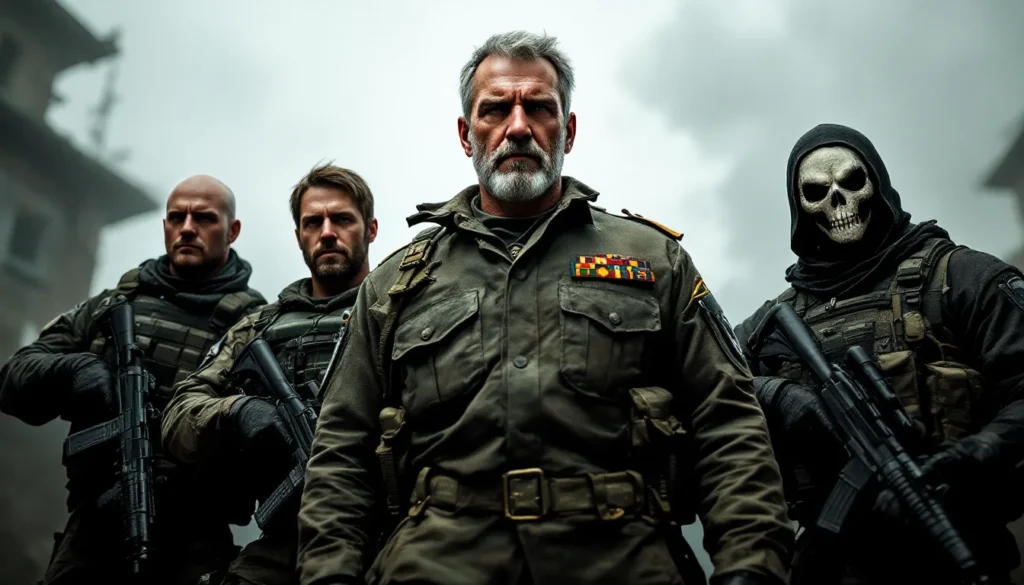
ToggleCall of Duty has built a legacy that extends far beyond multiplayer gunplay and explosive campaign moments. At its core, the franchise thrives on unforgettable characters, soldiers, operators, and antagonists who’ve become just as memorable as the weapons we use to take them down. Whether you’re a campaign enthusiast replaying the older titles or jumping into the latest reboot, the main characters are what separate a good shooter from a legendary one. They’re the ones giving orders in your ear, holding the line beside you, or orchestrating chaos from the shadows. This guide digs into the most iconic Call of Duty main characters that have defined the franchise’s narrative identity over two decades.
Key Takeaways
- Call of Duty main characters like Captain John Price, Roach, and Makarov have evolved from voiceless soldiers into fully realized personalities that drive campaigns and define the franchise’s narrative identity.
- Character development in Call of Duty has progressed from simple military storytelling to psychologically complex narratives, with characters like Alex Mason questioning their identity and Raul Menendez challenging players’ moral perspectives.
- Iconic Call of Duty main characters such as Ghost, Soap MacTavish, and Farah Karim serve as emotional anchors for players, with their deaths and arcs creating memorable moments that resonate across two decades of franchise history.
- Recent Call of Duty titles prioritize diverse, morally ambiguous characters from international perspectives, reflecting mature storytelling that acknowledges civilian costs and the complexities of modern military operations.
- The franchise’s integration of campaign characters into multiplayer operators has made character identity crucial across all game modes, transforming Call of Duty from tactical gameplay into a cohesive narrative universe that keeps communities engaged between releases.
The Evolution of Call of Duty’s Character Development
Call of Duty didn’t start as a character-driven franchise. Early entries like Call of Duty 4: Modern Warfare (2007) introduced storytelling through a military lens, but it wasn’t until Infinity Ward began weaving individual personalities into the narrative that the series truly resonated. The original Modern Warfare trilogy established the template: personal stakes, mentor figures, betrayal, and loss. Players weren’t just soldiers anymore, they were following specific people with specific motivations.
The Black Ops subseries took this further, exploring psychological warfare, CIA operations, and morally gray characters operating in the Cold War. These weren’t your typical “good guys fighting bad guys” scenarios. Characters like Alex Mason questioned their own memories, their loyalty, even their identity. This narrative complexity elevated the franchise beyond typical military shooters.
By the time the Modern Warfare reboot arrived in 2019, character development had become integral to the campaign experience. The reboot introduced a new generation of operators with their own backstories, struggles, and interconnected arcs. Recent titles have continued this trend, with characters feeling more grounded and relatable, even when they’re performing superhuman feats. The evolution reflects both gaming audiences’ growing appetite for narrative depth and the franchise’s confidence in telling mature, character-focused stories.
Modern Warfare and Black Ops Heroes
Captain John Price and the SAS Legacy
Captain John Price stands as arguably the most iconic character in Call of Duty history. Introduced in Call of Duty 4: Modern Warfare, Price’s gruff demeanor, tactical brilliance, and unwavering code made him an instant favorite. His iconic quote, “Remember Roach”, delivered with a thick British accent, became a rallying cry for players everywhere. As leader of Task Force 141, Price embodied the soldier’s soldier: decisive, loyal, and willing to do whatever it takes to complete the mission.
Prince’s character arc across the original Modern Warfare trilogy showcased genuine character development. He started as a captain following orders, evolved into a commander making his own calls, and eventually became a soldier fighting for something larger than himself. In the 2019 Modern Warfare reboot, Price returned as an older, weathered version of himself, now operating in a world of private military companies and international black ops. His presence in recent titles, including Modern Warfare II (2022), proves the character’s staying power. Players gravitate toward Price because he’s competent without being invincible, he gets hurt, he makes tough choices, and he carries the weight of those decisions.
Gary Roach Sanderson: The Soldier’s Soldier
Gary “Roach” Sanderson represents a different archetype: the loyal soldier under command. Featured prominently in Modern Warfare 2 (2009), Roach serves as your player character during critical campaign missions. Unlike some blank-slate protagonists, Roach has personality, he banter with teammates, he reacts emotionally to what’s happening around him, and his death hit players harder because of his genuine characterization.
Roach’s campaign section in Modern Warfare 2, particularly the mission “Loose Ends” and its aftermath, delivered one of gaming’s most shocking moments. The helicopter crash, the betrayal, and the final moments, it’s a sequence that stuck with players for over a decade. This wasn’t just a scripted event: it mattered because we’d spent hours alongside Roach, hearing his voice, learning his mannerisms, and building investment in his survival.
Black Ops’ Iconic Operatives
Black Ops shifted the character focus to CIA operatives and unconventional soldiers. Alex Mason, the protagonist of Black Ops 1 (2010), operates in a different arena, Cold War espionage, assassination, and morally questionable operations. Mason’s fractured narrative, jumping between past and present, introduced players to a soldier whose reliability couldn’t be guaranteed. He’s effective, dangerous, and fundamentally compromised.
Frank Woods, Mason’s fellow operative and longtime friend, provides the human element to Black Ops’ grittier tone. Woods embodies the “soldier first, everything else second” mentality, but with genuine camaraderie beneath the gruff exterior. Their relationship drives Black Ops’ emotional core, especially as the series unfolds and reveals truths that shake both characters’ understanding of their past missions.
In Black Ops 4 (2018), the focus shifted to a squad of specialists rather than a single protagonist. Ruin, Crash, Ajax, and Torque each brought unique tactical abilities and personality quirks, marking a transition toward team-based narrative identity that would define later entries.
Memorable Antagonists and Villains
Makarov and the Russian Threat
Vladimir Makarov remains the franchise’s most terrifying antagonist, not because he’s physically overwhelming, but because he’s devastatingly intelligent. The primary villain of Modern Warfare 2 and 3, Makarov orchestrates false flag operations, manipulates global superpowers, and nearly triggers World War III. What makes Makarov compelling is his ideology: he’s not motivated by greed or madness, but by a twisted vision of Russian supremacy and geopolitical dominance.
Makarov’s presence looms throughout Modern Warfare 2 even before players encounter him directly. His influence shapes missions, creates consequences, and drives Task Force 141’s desperation. By Modern Warfare 3, when Makarov finally appears as a tangible threat, the confrontation feels earned. The iconic hotel sequence, where Makarov taunts Price and the player character realizes the scope of the threat, demonstrated Call of Duty’s ability to craft truly memorable villain encounters. Players can explore Call of Duty Villains: for deeper analysis of how antagonists shape the franchise’s narrative.
Menendez and Raul Menendez’s Impact
Raul Menendez, the primary antagonist of Black Ops 2 (2012), brought a different flavor to Call of Duty villainy. Where Makarov represented cold geopolitical ambition, Menendez operates from personal trauma and revenge. His backstory, shaped by CIA covert operations and personal tragedy, creates a villain that’s sympathetic even as he commits atrocities.
Menendez’s character design brilliantly subverts expectations. Players initially encounter him in the past, witnessing formative moments that explain his motivations. This narrative structure forces players to confront uncomfortable truths: American military operations create enemies, even when well-intentioned. Menendez isn’t simply evil: he’s the product of larger geopolitical forces. His pursuit of vengeance against David Mason (Alex Mason’s son) creates a generational conflict that gives Black Ops 2’s campaign genuine weight.
The multiple endings in Black Ops 2 further elevated Menendez’s role. Depending on player choice and mission success throughout the campaign, Menendez’s fate varies. This variability, unprecedented for Call of Duty at the time, made him feel like an actual antagonist whose defeat mattered beyond a simple cutscene.
Special Forces and Specialized Units
Beyond individual protagonists and main villains, Call of Duty has introduced dozens of supporting operators whose competence and camaraderie define entire campaigns. Captain Kyle Gaz Garrick emerged as a standout in the 2019 Modern Warfare reboot, serving as the player’s entry point into a world of hybrid warfare and corporate military involvement. Gaz is younger, more idealistic than Price, and his arc exploring the morality of modern combat operations adds thematic depth.
Simon Riley, known as “Ghost”, became a community favorite through his appearances in Modern Warfare 2 and subsequent titles. The skull-masked SAS operator embodies mystery and lethal efficiency. Ghost’s emotional beat in Modern Warfare 2, his death alongside Roach, remains one of gaming’s most impactful moments, proving that supporting characters could deliver franchise-defining narrative beats. Recent appearances have kept Ghost relevant, with players eager to see how this character continues to evolve.
Soap MacTavish, originally a sergeant in the original Modern Warfare, ascended to commanding officer status by Modern Warfare 3. His journey from soldier to leader to hardened veteran reflects the franchise’s ability to sustain character arcs across multiple games. MacTavish represents the everyman soldier elevated by circumstance and capability, someone players root for because he feels achievable rather than superhuman.
Specialized operators like Farah Karim and Alex introduced in the 2019 Modern Warfare reboot brought international perspectives and diverse tactical approaches. Farah operates as a freedom fighter against oppressive forces, while Alex functions as an intelligence operative with his own agenda. These characters expanded the franchise beyond purely military perspectives, introducing civilian casualties, resistance movements, and the human cost of warfare in ways earlier titles didn’t fully explore.
Recent titles have emphasized squad-based gameplay with operator selection, turning character customization into a core mechanic. Players can read detailed analysis on various titles at IGN’s video game coverage for comprehensive character backgrounds and their implementations across different game modes.
Characters from Recent Titles and Reboots
Modern Warfare Reboot Characters
The 2019 Modern Warfare reboot breathed new life into the franchise’s character roster while maintaining connection to legacy characters. Captain John Price returned as a weathered veteran, but the reboot introduced him alongside a fresh generation of operators operating in a contemporary geopolitical landscape. The campaign follows Kyle Garrick, a British SAS operative thrust into conflict against militant organizations, private military contractors, and morally ambiguous allies.
The reboot’s narrative focus on civilian protection and the costs of military intervention differentiated it from earlier entries. Characters express genuine moral conflict about their operations. When Farah Karim expresses horror at civilian casualties or when Kyle questions the morality of their decisions, it adds texture to what could’ve been straightforward military action.
Nikolai appears throughout the reboot as an enigmatic Russian operative whose loyalties remain unclear. This character design, maintaining ambiguity about whether Nikolai is ally or enemy, created engagement and discussion within the community. The reboot’s willingness to complicate international relationships and avoid clear-cut hero-and-villain dynamics reflected maturation in the franchise’s storytelling approach.
Alex and Farah from the Reboot Era
Farah Karim stands out as one of Call of Duty’s most compelling recent characters. Introduced in the 2019 Modern Warfare campaign, Farah operates as a resistance fighter against militant occupation. Her character arc showcases personal trauma, the loss of family to military operations, and her journey from grieving survivor to effective operative. Farah isn’t a support character: she’s fully capable of leading missions and making tactical decisions.
The inclusion of Farah addresses long-standing criticism that Call of Duty’s rosters lacked diverse female protagonists. More importantly, her storyline introduces perspectives from regions typically portrayed as conflict zones rather than homes. Players experience her motivation beyond mechanical objectives: her fight is personal, ideological, and emotionally resonant.
Alex, another standout from recent campaigns, functions as an intelligence operative with connections to CIA operations. Alex brings cynicism about governmental institutions and military industrial complexities. When players uncover that Alex has been manipulating operations for personal objectives, it adds layers to the franchise’s exploration of how well-intentioned military structures can become vehicles for individual ambition.
Both characters represent the modern Call of Duty approach: complex motivations, moral ambiguity, and international perspectives. Recent coverage from Dexerto’s esports and gaming coverage frequently analyzes how these characters influence both campaign narrative and multiplayer operator identities. The connection between story characters and playable multiplayer operators has become increasingly important, with many campaign protagonists available as selectable operators in competitive modes.
Modern Warfare II (2022) and Modern Warfare III (2023) continued this trend, introducing operators like Makarov (reimagined as a modern antagonist) and expanding the roster with characters from various global military organizations. This expansion acknowledges that Call of Duty’s audience is worldwide, and character rosters should reflect that diversity.
How Call of Duty Characters Define the Franchise
Characters transform Call of Duty from a series of tactical scenarios into a cohesive narrative universe. When players think of Call of Duty, they’re not just remembering firefights, they’re recalling Price’s gruff confidence, Makarov’s cold intelligence, Roach’s loyalty, and Mason’s fractured psychology. These characters give context and consequence to every mission.
The franchise’s longevity stems partly from its ability to introduce new characters while maintaining legacy ones. Players experience emotional continuity when a beloved character returns, even years later. Price’s reappearance in the 2019 reboot wasn’t just fan service: it was validation that player investment in these characters mattered. Conversely, character deaths hit harder because the franchise has proven willing to remove beloved figures from future stories.
Characters also drive community engagement. The debate over whether Ghost deserved better treatment, discussions about Farah’s representation, and speculation about Makarov’s true allegiances keep communities active between releases. Character development creates narrative hooks that extend beyond individual games.
Multiplayer integration has deepened character importance. Operators aren’t just skins: they’re characters with backstories, voice lines, and personality. Operators like Ghost, Roze, and Kreuger bring campaign context into competitive modes, making multiplayer feel connected to larger narrative frameworks rather than existing in isolation. This approach has become industry standard, but Call of Duty pioneered making character identity matter across all game modes. You can explore more about the franchise’s cultural impact through Twinfinite’s guide collection, which covers how character-driven narratives enhance gaming experiences.
The franchise’s willingness to take risks with character development, unexpected deaths, moral compromises, narrative betrayals, separates Call of Duty from competitors. Players can’t simply assume their favorite character will survive or succeed. This unpredictability keeps campaigns engaging and characters memorable. Whether facing down Menendez’s calculated revenge or witnessing Ghost’s shocking demise, these moments define what Call of Duty campaigns mean to their players.
Conclusion
Call of Duty’s main characters have evolved from voiceless soldiers into fully realized personalities that drive campaign narratives and community conversation. From Captain Price’s tactical brilliance to Makarov’s geopolitical ambitions, from Roach’s tragic sacrifice to Farah’s resistance heroism, these characters have shaped two decades of franchise history.
The franchise’s strength lies in understanding that players invest in characters before they invest in gameplay. A mission hits harder when you’re fighting for someone you care about. A villain feels more threatening when their motivation goes beyond generic evil. The best Call of Duty campaigns understand this fundamental truth.
As the franchise continues evolving, character development remains central to its identity. Whether through new protagonists in upcoming titles or returning favorites like Price and Ghost, Call of Duty’s character roster ensures that campaigns feel personal, consequential, and worth replaying. These aren’t just soldiers and operators, they’re the beating heart of why Call of Duty continues to resonate with millions of players worldwide.